


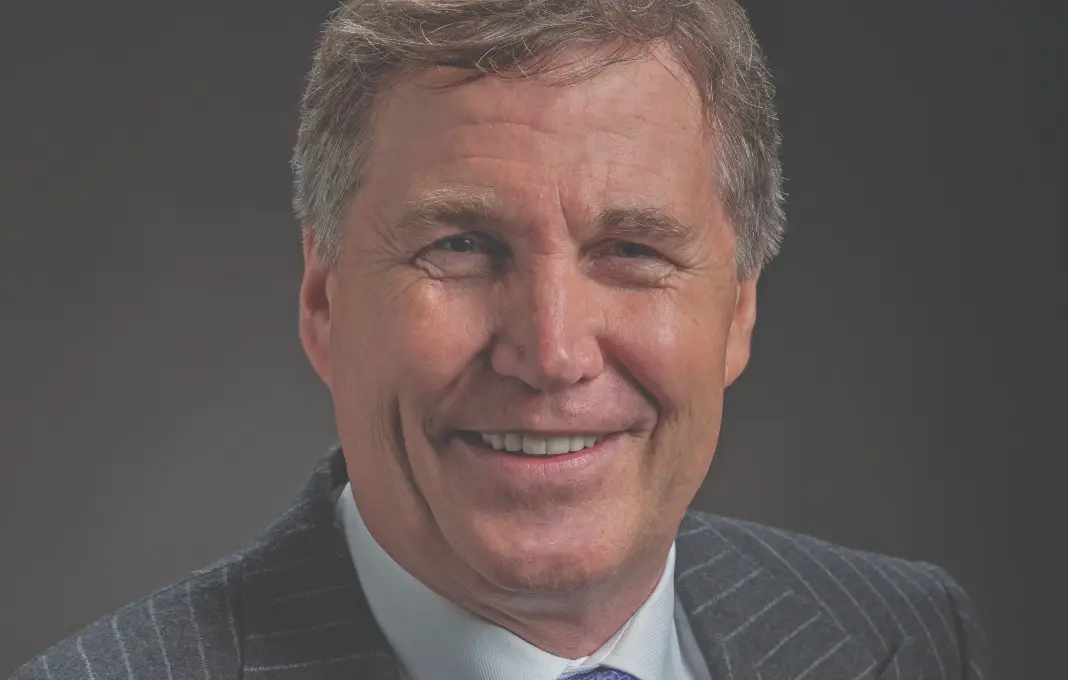
What did Caterpillar, a global economic bellwether with more than 4 million products, more than 110,000 employees and a network of dealers in 190 countries, need in its next finance chief? For a company that usually harvested its top executives from a population of employees with decades of experience internally, it was someone with no Caterpillar experience at all—or even any experience in construction, mining or transportation. At least that’s what it looks like in Andrew Bonfield’s seventh year as CFO of the industrial giant that is now 100 years old, 59th on the Fortune 500 and sporting a market cap of $233 billion.
In 2018, Bonfield, a seasoned CFO with stints leading finance at Bristol-Myers Squibb, Cadbury and National Grid, brought to the Irving, Texas-based company many previous CFOs didn’t: the de Tocqueville perspective, the outsider’s advantage, the ability to put a fresh set of eyes on a sprawling, decentralized company.
What Bonfield has helped coax out of the organization and made visible, especially to Wall Street, is a value-creation machine with a disciplined capital investment model that steers resources to markets and businesses with the best potential for future growth. Shares in CAT are up more than 200 percent in the five years versus around 90 percent for their industry index and 93 percent for rival Deere & Co. It’s a performance that led a panel of Bonfield’s peers to name him our 2025 CFO of the Year.
UNDER CONSTRUCTION
The foundation of value creation at Caterpillar is the Operating & Execution (O&E) Model, a strategic framework that identifies areas of the business where value is either created or consumed. The model also helps the company gain a deeper understanding of where it has a competitive advantage, according to former Caterpillar CEO Jim Umpleby.
While devised years ago, Bonfield’s “institutionalization of Caterpillar’s O&E model has focused the entire company on a clear definition of winning and put in place the capabilities to achieve and sustain top performance,” says Joe Shalleck, partner & managing director, AlixPartners, who advised the committee of CFOs who named Bonfield CFO of the Year.
For Caterpillar’s finance team, the profit metric that governs investment is OPACC—operating profit after capital charge. OPACC is a measure of economic value added, meaning it calculates the surplus value a company generates above its cost of capital.
OPACC guides Caterpillar in targeting operating improvements and strategic resource allocation across its complex portfolio. OPACC also identifies businesses that are underperforming, says Bonfield, and it has actually reduced the amount of capex needed by Caterpillar, as the company no longer chases business cycles and overbuilds capacity when demand spikes, thereby boosting free cash flow.
I’ve never been a micromanager. I don’t smother them, which I think is one of the worst things you can do. I allow my people the space they need to operate. I trust them.
“We throw off a lot of cash each year as a result of the model,” Bonfield told CFO Leadership.
In a year when seven companies and a possibly life-altering technology have captivated investors and moved markets, a company whose most iconic products move dirt has achieved a 37 percent increase in share price heading into the fourth quarter of 2025. Among DJIA members, Caterpillar lags only NVIDIA and Goldman Sachs this year.
Wall Street analysts are particularly fond of Caterpillar’s exposure to the boom in data center development. The company’s power generation segment provides turbines that the massive data centers behind the AI revolution require for backup power. Global infrastructure demand—rising investment in roads, bridges, airports and waterways—will also benefit Caterpillar, Wall Street analysts posit.
In the short term, though, Caterpillar expects a tariff-related impact of up to $1.8 billion for the current fiscal year, which will erode its margins. But as Bonfield points out, Caterpillar is a net exporter from the U.S., which will remain “a critical manufacturing base.”
‘THE SPACE THEY NEED’
Having been a CFO and finance director for 27 years, Bonfield says there’s not much that fazes or surprises him. “There are always things we have to deal with, but the shock factor becomes less,” he says.
Bonfield started his career at PriceWaterhouse and qualified as a chartered accountant in South Africa after graduating with a Bachelor of Commerce degree from the University of Natal in Durban, South Africa (now called the University of KwaZulu-Natal).
As a manager, his leadership style has changed over the years. “I’ve never been a micromanager. I don’t smother them, which I think is one of the worst things you can do. I allow my people the space they need to operate. I trust them,” Bonfield says. He describes himself as a more coach-type leader than when he first started, helping new team members by providing “cover” for them to make a mistake or two and learn from it.
In a wide-ranging interview, Bonfield discusses some of the inner workings of Caterpillar, his efforts at improving investor relations and why investments in innovation are important, even when “there’s no line of sight to profitability.”
Why did you take the job at Caterpillar?
Caterpillar was a chance to do something very different. The technical aspects of the CFO’s role—accounting, audit, investor relations, treasury and tax—tend to be very similar. The more challenging part is applying business principles and understanding how they work within the organization. I tried economic value added (EVA) in a previous role, and I would say it was relatively unsuccessful. Part of the reason Caterpillar has been so successful over the past couple of years is the fundamental principle of EVA. We used to call it OPACC—operating profit after capital charge. It’s effectively the same thing—driving cash. We throw off a lot of cash each year as a result of the model.
Your appointment as Caterpillar CFO in 2018 was somewhat unusual in the company’s history.
It’s unusual at Caterpillar to bring in executives from the outside. I was the first CFO appointed from the outside. Caterpillar is a large and complex company. You need to understand how the business operates. It’s very relationship-based. Given my background, I’ve been in multiple large companies, that’s one of the reasons [former CEO] Jim [Umpleby] was comfortable bringing me in.
What do you mean by “relationship-driven?”

GE, for example, has a strong, process-driven culture; we have a decentralized culture. If you’re used to pushing a button and having a single instance ERP give you a result, you’re at the wrong company. Understanding those nuances is essential, as well as understanding how to get things done using the power of the team. My righthand man, my go-to person, is Kyle Epley [SVP, global financial services division]. If there’s anything I need to understand or find out, Kyle’s the person who can help me navigate my way through Caterpillar, thanks to his history with and knowledge of the company.
What else did you bring to Caterpillar?
I think the most important thing was an outside-in view. As I said, Caterpillar has a robust internal culture. People are developed from within, which is a considerable strength. We are also a very devolved organization. Decentralized product managers have significant decision-making authority over their product—again, a strength. But sometimes, if you over-index on your strengths, they can become weaknesses. I think Caterpillar missed out a little in not bringing in different perspectives from the outside. Caterpillar is a company that often keeps some of its successes hidden.
And I presume that could affect the external perception of a company. What was Wall Street missing?
One of the first things I recognized was that by focusing on the O&E model and OPACC, the company generated cash throughout the economic cycle, even during downturns. We have a much more resilient business model than we were getting credit for. But Wall Street measured us as if we were a cyclical business. From the sell-side analyst perspective, that’s a simple formula that uses peak and trough earnings. However, at Caterpillar, the difference in cash flow and cash generation between an up cycle and a down cycle is minimal. What we communicated to the outside world was that they were viewing us in a simplistic manner. Internally, it was known, but it wasn’t necessarily communicated.
Can you give us an example of one of those hidden successes?
Our autonomous mining trucks [with the Cat MineStar Command for hauling] system. We’ve driven more autonomous miles than all the car companies put together, moving 7 billion tons of dirt in real-world conditions with zero accidents. Mining sites are very dusty, challenging and not everything is autonomous. To have a zero safety record and higher productivity is one of the great successes of Caterpillar. But people don’t think of us that way. The engineering excellence at Caterpillar is a little understated.
How did you overhaul how you communicated with analysts and investors?
At my first investor conference, I had six meetings with hedge funds. As a global economic bellwether, we did not need to meet with hedge funds frequently. In comparison, I recently attended an investor conference and had six meetings, only one of which was with hedge funds. The area where I spent the most time when I first joined Caterpillar was investor relations, as we had developed internal capabilities but hadn’t yet built external ones. We now have a current VP of investor relations who was an internal candidate but also has more financial markets experience. We also have a core of investor relations professionals who understand how to conduct targeting studies and ensure we’re reaching the right people.
Wall Street has given you credit for transparency and more predictability. Do you regularly give earnings guidance?
We don’t give profit per share guidance; we provide qualitative guidance, which, as you can imagine, the sell side hates. Short-termism is driven by the sell side, not the buy side. The hedge funds pay the sell side, they are a vast source of remuneration for them. I don’t think companies tend to be as short-term as analysts are. From my experience, most people are aware that the most important followers of the stock are those who own it for three to five years, not those who own it for three to five days.
Services seem to be a larger component of the topline. Does that play a part in more consistent financial performance across economic cycles?
Services are an important element of what we do. Generally, services represent about 35 percent to 45 percent of cash revenue. We’ve grown them a lot—from $14 billion in 2016 to $24 billion last year.
I have not seen one company do budget planning well, and that includes my experience as an independent director…it’s a broken process.
When a machine is in the field, it utilizes a variety of parts and services throughout its lifetime; that’s key for our dealers. Making sure our machines are available is key for our customers. For example, when you drive past a piece of construction equipment on the roadside, what’s usually happening? Nothing. The utilization rates aren’t always that high. However, when you need it, you need it.
Caterpillar’s brand promise to its customers is that although the initial cost may be relatively high, our machines have the lowest total cost of ownership and are the most productive. And they have the best resale value.
When you joined Caterpillar, how did you learn the construction and mining equipment business?
The best way to learn the iron is to get on it. They sent me out to Peoria [to the demonstration and learning center], and I spent some time driving an articulated truck and a little bit of time in an excavator. I can tell you that my fear of doing more damage than good on large pieces of equipment is always present. Obviously, you need to try to understand how the business relates to the performance.
How do you track a business’ financial performance?
I learned many years ago that one of the most successful ways to understand performance is to have monthly performance reviews. Instead of business by business, we do it by segment. Group CFOs attend the meeting and present their financial numbers. Part of that is to promote ownership of any forecast. What is the likely outcome for the year? The reviews help build a collective sense of responsibility and enable us to understand some of the business challenges and drivers much more quickly. We do deep dives on each business on an annual basis using the O&E model.
How do you apply the O&E model when reviewing the businesses?
The O&E model has some core fundamental parts. The focus is on OPACC. But we also have a heat map showing OPACC by product, by geography, [so we can see] where we are challenged. We also examine the competitive positioning in each market. All of that is part of the O&E model process and the discipline.
It’s not all by spreadsheet. It brings finance into a dialogue with both underperforming businesses and those performing exceptionally well. Are we investing enough in the businesses that are throwing off a large amount of OPACC? Are we spending enough on new product development to ensure we remain cost-competitive, and not only cost-competitive but also technology-competitive?
With a product like autonomous trucks, that’s not going to produce operating profit right away. How do you justify that investment?
No, they’re not. Let me give you another example. About four years ago, we established an electrification division, primarily focused on large mining trucks, as these vehicles are the largest source of carbon emissions for miners. We decided to invest a considerable sum of money in electrification. There was no line of sight to profitability. We did it so that we would be ready when customers were ready. There are some complex issues and significant cost implications versus the internal combustion engine alternatives. And there isn’t a substantial pull-through from customers at this point.
But it was an investment made based on knowledge that, in the long term, it will pay off. The worst thing you can do is be left behind and come late to the party. Customers suddenly say, “Hey, we need electric excavators,” and you are three or four years away from having something marketable. But it’s pretty hard to put that or an investment like that or autonomous vehicles into a business case. We’d probably still be arguing about when the first cash flows were going to come in.
Another example of an innovation investment would be our e-commerce platform, CAT Central, which we launched to make it easier to do business with CAT. Customers don’t have to go to individual dealers’ websites to find the right machine part. If I had followed the normal process, I would have ended up visiting each of the divisions to agree on how much in incremental sales they could deliver via the platform. We believed the incremental sales revenue would justify the investment.
Are you in the budgeting and planning cycle for 2026? Do you have a set approach to planning?
We’re just starting. We appear very traditional, with a bottom-up approach. My personal view of business planning is that it is a compensation discussion, rather than a management tool for measuring performance. Once the business plan’s approved, I’m looking at actual numbers.
I have not seen one company do budget planning well, and that includes my experiences as an independent director. Finance departments spend way too much time reworking business plans. It’s a broken process. Volvo tried a rolling 15 months. They gave up after a while. Heinz did zero-based budgeting. That blew up pretty quickly. It’s a challenge.
Monthly performance reviews are significantly more important.
To me, yes. It’s much more about understanding what’s likely to happen, as well as the risks and opportunities. I spent time at Bristol-Myers Squibb during its period under an SEC consent decree. I couldn’t do any top-down budgeting and forecasting. You learn different techniques and conversations to gauge likely outcomes.
Regarding external investments, Caterpillar has made both acquisitions and divestitures over the years. How do you decide on the businesses to divest?
We’ve divested some of our lower-performing businesses. One of the aspects of the O&E model is what we call “challenge” businesses: We don’t see a way for them to achieve a return above the cost of capital. We’ve done a number of those since I’ve been here.
How do you know when to exit?
There’s never a perfect time, let’s put it that way. Usually, it’s a painful process. When we see we’re never going to generate enough OPACC over time, we exit and cut our losses. Acquisitions tend to be relatively small, more about capability than product. There aren’t many infill acquisitions that would round out the CAT portfolio and help us perform better. We’ve been much more focused on getting the businesses we have operating as well as they should be.
Information technology reports to you. How do you think that benefits the organization?
We split technology into digital, which includes customer-facing apps, and that reports to our VP of digital technology. I have the traditional technology department. The structure works pretty well. One of the dangers is to always look at technology from a value-add perspective rather than purely as a cost. It’s funny. I’m more focused on the value add than the business leaders; at times, they only focus on cost. When you get to the debate about budgeting, they ask, “By the way, I’m using cloud computing and I’m using a lot more data. But I want it cheaper. Can you give it to me for less?” Those are interesting conversations.
Have you deployed AI at all?
On a fairly limited basis at the moment. It’s mainly being used in our digital applications. We have telematics data coming from machines for condition monitoring. If a fault code comes up on a machine, it used to take an hour to search all the different data; it used to take them an hour. Now, it takes only 10 minutes to gather the various data sets—engineering files, repair histories. So, AI presents a massive opportunity for us, particularly in predictive maintenance. The holy grail of any OEM is predictive maintenance. We have what we call “prioritized service events”—early-stage servicing to avoid a downtime event. So we’re getting closer to [predictive maintenance], but we’re not quite there yet.

Across the organization, obviously, AI will drive productivity benefits. AI can quickly retrieve data from various data sources. A significant portion of our work is currently being handled by bots, but we are exploring more AI-driven options.
You started as an accountant. Is an accounting background still an important qualification for being a CFO?
I am a member of the Institute of Chartered Accountants in England and Wales. In the UK, accounting rules are much more principles-based, so the job requires a lot more critical thinking. Most CFOs in the UK, probably 90 percent of the FTE 100, have a technical accounting background. That would be seen as added value, in the same way, I think, an MBA is seen in the U.S. In the U.S., accounting qualifications are very rigid, and they often don’t emphasize critical thinking. Being an accountant’s accountant is probably not the most successful path to becoming a CFO. If you’re a strategic business partner, you need to understand the business.
What does being a successful CFO require?
Two key factors matter for someone who aspires to be a CFO. The first is technical capabilities: You must be able to perform the job. The second is chemistry with the CEO, the ability to have challenging conversations with them. You have to be able to agree or disagree, air the differences, sort them out and move forward. I recall one CEO candidate I met, who walked into the interview and said, “Sorry, I’m late. I just got off the phone with the President.” That interview was effectively over. If you’re elevating yourself to that level, I’m never going to be able to close the door and say, “You screwed that one up.”
