


Accenture's latest Pulse of Change survey found that executives across the board are largely optimistic about revenue growth this year, despite a notable gap between the sentiments of CFOs and CEOs. One thing they agree on is that both groups believe AI will be a key driver, regardless of the level of growth.
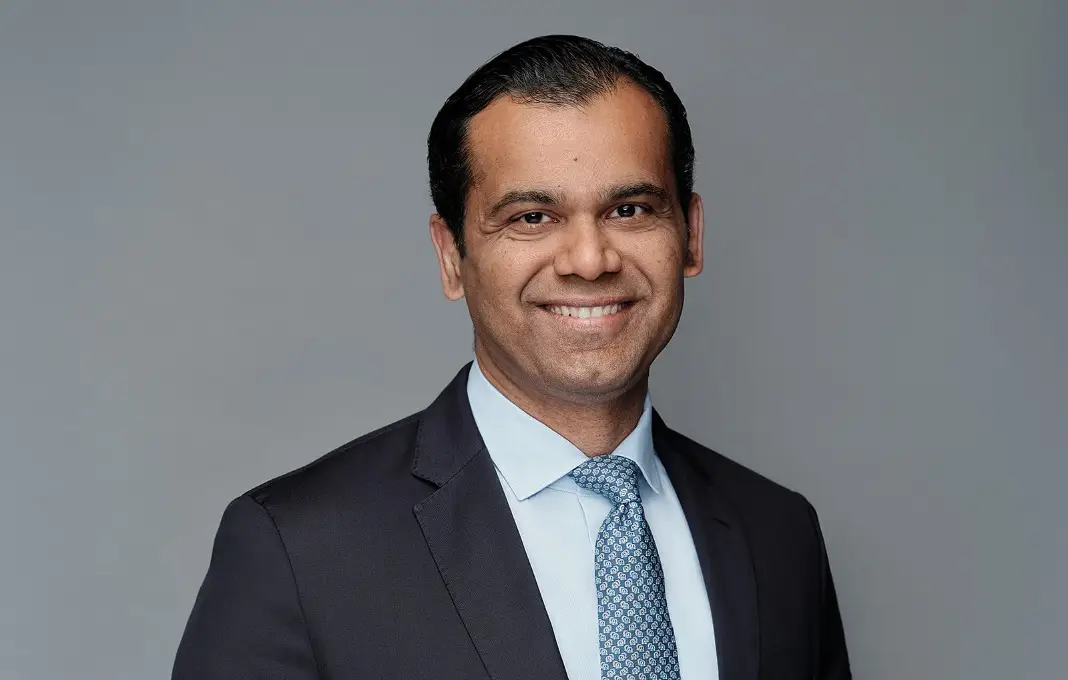
Mukshit Ashraf, group chief executive officer of Accenture Strategy, spoke to CFO Leadership about the firm's survey of 3,650 executives and 3,350 employees around the world.
63% of CFOs expect overall revenue growth to accelerate, compared to 79% of CEOs. What does this tell us about the CFO's role in grounding growth ambitions in financial reality, and how do they manage these different expectations?
CFOs are generally more conservative than CEOs when it comes to their 2026 revenue forecasts.
For example, only 35% of CFOs expect domestic sales to increase significantly in 2026, compared to 47% of CEOs. However, almost half (49%) of CFOs expect stronger international growth, suggesting that CFOs are being strategic, prudent, and striving to stay focused on market-specific realities.
The CFO must work in a complementary role with the CEO and other members of the executive team. By providing a data-driven, realistic perspective, CFOs must double down on their ability to drive smart decisions and help CEOs shape the growth and direction of their organizations.
As the rules of competition and leadership are being rewritten, a company's strategy is most powerful when it combines the ambition of a CEO with the pragmatism of a CFO.
It's clear that CFOs are enthusiastic about AI, with 87% expecting increased investment and nearly 70% believing AI will be more beneficial to revenue growth. Where are CFOs seeing the most tangible results, and how is AI contributing to top-line growth?
CFOs have the same beliefs about AI as other executives. Leaders are championing AI as a key revenue driver, and we're seeing applications used throughout the project lifecycle, from idea generation to implementation to analyzing results. Some of our clients have a clear focus on delivering business outcomes enabled by AI.
For example, three-quarters (78%) of executives now believe AI is more beneficial for increasing revenue than reducing costs, an increase of 13 points from June 2024. This optimism is reflected in CFOs increasing their use of AI in their daily work as well. Currently, 36% of CFOs are using generative AI in their work, second only to chief strategy and innovation officers (51%).
This daily implementation is extremely important. By automating routine tasks and streamlining workflows, AI allows CFOs to focus more time and energy on high-level strategic work that ultimately drives top-line growth.
In general, executives plan to continue investing in AI despite the possibility of an “AI bubble.” That said, nearly half (43%) of CFOs indicated they would reduce hiring in such a scenario. How should CFOs balance their mission to innovate with AI with contingency planning for potential market corrections?
Confidence in AI is high, with 87% of CFOs expecting to increase AI investment this year, while 43% expect to cut jobs if the “AI bubble” bursts. This data illustrates the critical balance that CFOs and executives must achieve between desired innovation and necessary caution.
There is a clear consensus that AI is a transformative technology, and the question is how organizations can invest in it in ways that are fiscally responsible and build resilience within their organizations.
What's the answer?
We ensure that people are in control when it comes to AI. In the past, we've seen companies spend two-thirds of their investments on technology and one-third on talent. This equation has to be flipped.
It's important for CFOs and other executives to spot trends in where technology is heading, understand where enterprise value can be created, and build partnerships with the next generation of internal and external players to help organizations move quickly and at scale.
Regardless of potential changes in the market, the value of a skilled workforce that can leverage AI to drive top-line results will never diminish. Effectively training and upskilling your workforce to unlock the full potential of AI is the ultimate contingency plan.
Based on these findings, what do you think are the most important leadership skills that CFOs and other senior executives will need to effectively lead their organizations through this period of expected change and technological transformation in 2026?
Our research shows that a whopping 82% of executives expect higher levels of change in 2026 than they did a year ago. In an era marked by constant technological, geopolitical, and economic disruption, organizations seek clear areas of stability to ensure continued growth.
The anchor is the workforce. While many companies focus solely on scaling their technology, the biggest barrier to realizing the full value of AI in 2026 will no longer be the technology itself, but alignment with the people and processes that power it.
Data shows that employees want a say in how AI shapes their work. They want to learn and be at the forefront of AI transformation, with 43% saying they would feel more confident using AI tools if they received clear training.
The instructions for senior leaders here are clear: Invest in your people. and technology at the same time. This dual embrace of human and AI elements will empower CFOs to lead their organizations with confidence and scale enterprise-wide transformation in 2026.
