


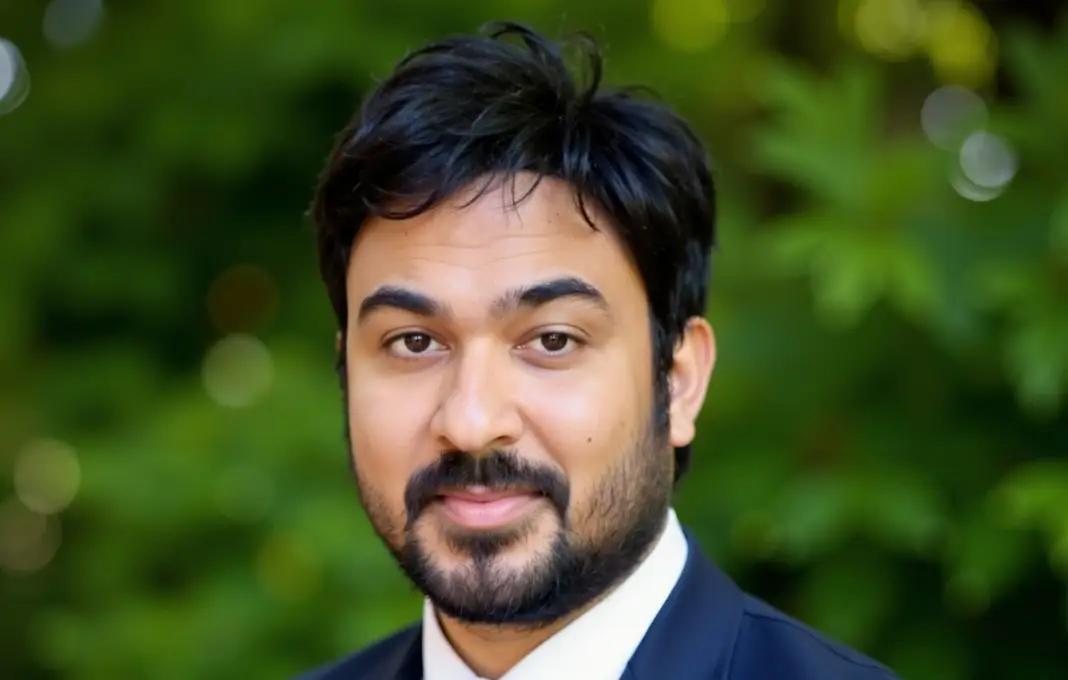
Anshuman Yadav is a Chicago-based finance leader who provides fractional CFO services to companies. He has worked in AI, M&A as a startup founder and for large organizations. In other words, in the midst of today's most pressing financial situation.
No matter what stage of growth an organization is in, whether it's acquiring funding or allocating funding, Yadav has learned a clear message for finance leaders: That means “be bold.”
What are the principles you use to make capital allocation decisions today, whether you're a large technology company or an early-stage startup?
I treat capital allocation as a reflection of confidence. Clarity of beliefs is more important than spreadsheets. The real question is not what looks good in the model, but what moves the system forward with the least amount of friction.
At a startup, I operate by personal rules. “If you don't want to give your team more of your time, you shouldn't give them more of your capital.” In any case, time is the strictest constraint.
I'm using a three-lens filter, is it reversible? Are the decisions asymmetrical, upwards and downwards? Can I create momentum for multiple teams instead of just one?
Most capital is wasted not from wrong choices, but from delayed corrections. I revisit assignments just as the product team revisits their roadmap. Reassign quickly, delete quickly, grow quickly.
Optimal allocation decisions are not made in isolation. They are created based on context. And the clearer the context, the less you have to gamble.
How is the CFO role evolving with AI and automation? What advice would you give to finance leaders facing this change?
The modern CFO is more than just a decision maker. They are design thinkers. With AI, the job moves from reporting what happened to designing how the business learns and reacts.
I used AI to build cash flow forecasts, adjust them weekly, and detect churn patterns long before earnings were announced. But the real door opened when we stopped thinking about what AI could do and started asking what we no longer needed to do ourselves.
Automation is not about tools. This is about drag removal. I now treat my workflow like a product sprint. If it takes 6 steps, can you go up to 3?
For finance leaders: Stop thinking of AI as a technology project. Think of it as a culture change. Teach your team to question every manual task. Be curious about operational reviews.
The winning team is not the one with the best model. They are the ones with the most flexible minds.
What lessons would you share with young financial professionals about building a career that can adapt and grow over time?
Start by solving problems that no one else owns. That's where growth comes from. Our job is not to follow a title or framework. It is about developing judgment and range of action.
Early in my career, I built the perfect model. But I quickly learned that unconvincing accuracy doesn't change the outcome. Influence matters. Storytelling is important.
The biggest breakthrough for me was when I tried to do something that no one else asked me to do. Build a pricing model from scratch. Performing M&A valuations outside of my scope. These bets taught me more than any formal promotion.
Also, don't wait until you're ready. You gain altitude by flying, not by watching others take off.
One habit I recommend to everyone is writing. Not for the audience, but for myself. Writing demands clarity, and you will gain more clarity in every meeting, memo, and model.
You don't have to climb the ladder to have a great career in finance. They build maps. I want to collect experiences that open doors that I don't even know exist yet.
Having worked in small business lending and corporate finance, how do you think about risk management today? How can finance teams stay disciplined without stifling innovation?
Risk is not something to be avoided. It is to be framed. In lending, I learned to quantify the downside. In a rapidly growing situation, I learned how to rein in momentum without killing it.
My current approach is simple. I'm going to make a bold bet and install an airbag. I use up-front analysis, decision trees, and “tripwire metrics” that tell me when to back out. These add just enough structure to keep the pace honest without dragging.
Most finance teams over-correct. They control decision-making by endlessly approving. In doing so, they lose their pulse. I try to do the opposite. I ask. How can we make failure acceptable rather than forbidden?
Risks should be considered in the real world, not from the sidelines. I incorporate risk reviews into the planning loop. If you don't discuss what could go wrong first, it's usually too late to fix it.
Discipline and innovation are not mutually exclusive. They are partners. The tighter the risk frame, the more confident the team can push the edge.
