


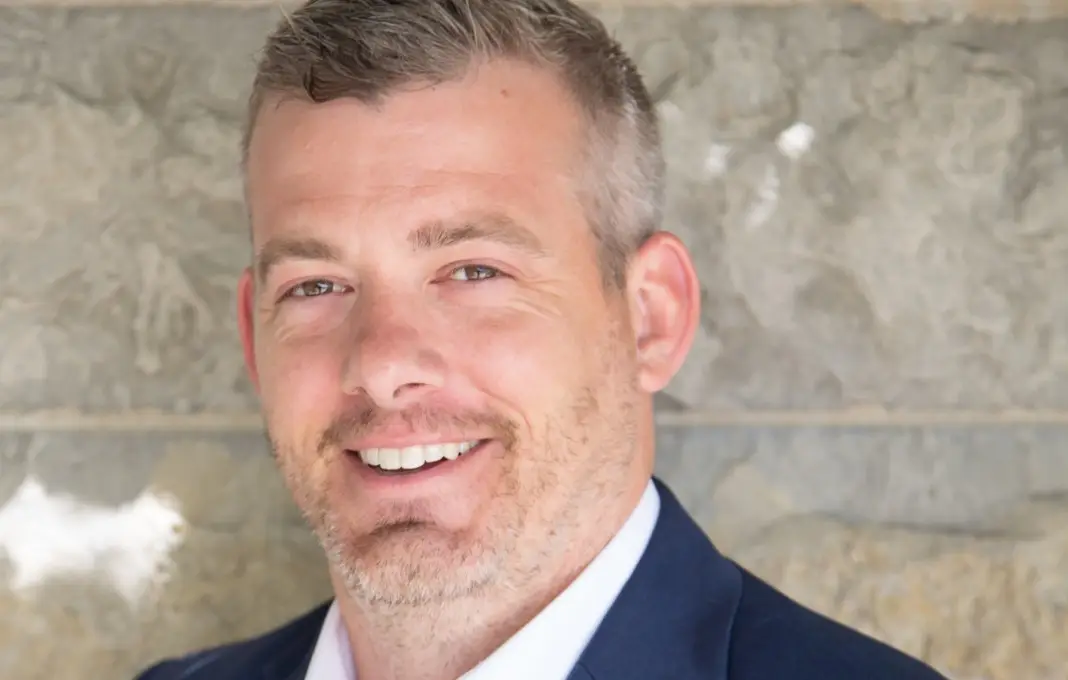
If anyone has felt the pain of uncertainty this past year, it's manufacturers. But for Dave Ring, not knowing is just part of the deal. “Business likes certainty, but the reality is that everything is uncertain,” he says. “It can be frustrating at times, but to some extent it can be boring when everything is known.”
Ring is CFO of Sentry Equipment. Sentry Equipment is a 100-year-old manufacturer serving highly engineered industrial environments and one of the earliest employee-owned companies in the United States, launching an ESOP 40 years ago. One component that Ring has chosen to focus on is employee support. “In this role, you help people navigate through clutter, provide direction, and create strategies and manage messages that support business strategy.”
In our interview, Ring talks about embracing uncertainty, harnessing the power of storytelling, and knowing when to take a stand. The Q&A below has been trimmed and edited for length and clarity.
Sentry primarily operates in highly engineered industrial environments. How do you deal with agility and uncertainty in the current manufacturing environment compared to more commercial manufacturers?
Sentry equipment is employee owned. It's a very unique concept. And it brings an extra sense of pride in individuals showing up to work. They know that their actions impact the value of the business, which is returned to them through the ESOP. [Employee Stock Ownership Plan] From a retirement perspective.
Given its structure, being employee-owned ensures a lot of free discussion and transparency if there is a problem working with each other.
Especially because we're a manufacturer and we're in the industrial sector, we've been at the forefront of driving innovation in our stores, using a lot of automation and machinery. We definitely had our challenges over time. People saw it as a potential job loss for us. That was never the intention. We just wanted to be as efficient as possible, stay abreast of current trends, and be able to offer good pricing to our employees.
As it started to gather momentum, behind it was a strategy that revolved around three key aspects: agility, velocity, and employee experience. We believed that by focusing on these core things and always being relevant to our customers, we would be able to adapt to changes in the environment around us.
When you feel some kind of disruption or uncertainty in the larger world, where do you turn first? Are you looking at your dashboard? Are you listening to conversations happening among your peers?
That's all. It's not just a dashboard, it's talking to individuals, sales teams, buying teams, and what are they feeling? You can read articles every day. It's coming faster than you can keep up. So it's kind of piecing it all together. And when we get together and talk about those things, it's not just one person's insight. The similarities that multiple people are seeing, multiple people saying, multiple data points pointing to are important. When you feel like, “I feel like something is happening here,” and you dig deeper, you realize that's where you want to focus your energy.
It's not top-down, it's instrumental rather than demanding, and it's more like a collective conversation. do you think that is accurate?
Yes, that is both a blessing and a curse. As an ESOP, we say that everyone has a voice, but not a vote, and this is true to some extent. This allows individuals within their respective areas, departments, and roles to have more say. Taking in that information can sometimes be exhausting and lead you down a rabbit hole, but there are important elements out there that allow you to connect the dots.
This is one of the key roles from a CFO's perspective. One of our responsibilities is to be able to tell our story and be in control of our emotions. There are many people in business with many opinions. I think it's important in this role to be transparent about what's happening in the business in relation to results, to provide insight into where we're going and where we'll get to, and to have a positive outlook so that we can remain optimistic no matter what happens to us.
There is always change. Businesses like certainty, but the reality is that everything is uncertain. There are no guarantees. It can be frustrating at times, but if everything is known, it can get boring to some extent. This is a story about that journey. In this role, you help people navigate clutter, provide direction, and create strategies and manage messages that support business strategy.
What is the trigger point when you know you need to change direction, and how do you communicate that to the rest of your team?
Much of the role of an accountant or CFO is based on numbers. I look at the numbers that come in and try to see trends. Rather than necessarily looking at a specific point in time, we look at a longer period of time and ask, “Do I need to make any adjustments?” Because if we were to adjust things month by month, it would be incredibly chaotic, and we're trying to avoid that. For our business, we look at the industries we're involved in, some of the news, and data points within those industries that may be relevant to how it impacts us.
Do you have an example of a moment when you had to quickly change direction or decided, “No, I’m going to keep going?”
Let me introduce a recent example. Many of our products support energy industries such as oil and gas and power generation, many of which are based on fossil fuels. If you watch the news today, you can't go a day without reading an article about artificial intelligence. This has been going on for quite some time, but obviously it's something that's been talked about from time to time in the last year or two. If you look at artificial intelligence itself, it requires a lot of computing power to function and consumes a lot of energy. We're hearing more and more about AI infrastructure, or data centers, being set up across the country in some form.
And whether we like it or not, the most stable form of energy delivery, the electrical grid itself, is currently based on fossil fuels. So we've faced some headwinds over the years based on our desire to go green. AI requires more conversations about infrastructure and power grids, and whether we like it or not, much of that will come from fossil fuels. So how can we support these industries and meet their demands? Because on top of artificial intelligence, [you] You still need to heat your home. We still need to empower our communities.
How do you balance short-term cost discipline with long-term investment?
That is the biggest challenge. It's useful when you have a picture you're currently drawing. We see growth in the near future, certainly in the next few years. This allows us to make decisions that we otherwise would not have been able to make. [able to make] Or our ability to spend a little more money than we have in the past. Given the outlook for the industry we are involved in, the risks are somewhat reduced. So this is the point where we want to make sure we capitalize on some of the opportunities, while also helping our customers understand this along the way. We don't have all the answers, and I don't think I have all the answers, but we just want to help support our customers and be a value-added supplier right next to them.
How do you personally make decisions if you don't have all the data, or if the data is incomplete?
No different than most companies. Since you're doing a SIOP plan, you're looking at what your funnel is telling you. It should help corroborate some of the ideas you're reading in the news. Some of those dots are starting to connect as you start to see your sales funnel and opportunities start to expand. You point out some of those things in my role, but my colleagues, whether it's on the shop floor, whether it's within engineering, whether it's on the sales team, are feeling the same thing in their respective fields, and I'm kind of relying on them to say, “Are you seeing the same picture?” And it's kind of a collective decision in the end. I'm not trying to take out the cops. Because sometimes I have to stand in the back. But for now, using your colleagues and gaining trust that what you see is out there makes it easier to make some decisions.
What advice do you have for other manufacturing CFOs?
I mentioned the pace of change. The pace of business today is quite fast. I don't think it will slow down at all. I believe that each person is unique in how they scan their environment and utilize the tools and resources around them to their advantage. I think that's the key. Also, what I specifically think about the role is what each company expects from the finance department, especially the CFO. And it's up to the person to decide if they are aligned with it or if they see something different to make a change.
I think this role is increasingly required to be more hands-on than just crunching numbers. It's important to not only be able to tell a story, but also to be able to say, “What can we do now?” This story is saying something. What do you do to get where you want to be or where you want to go?We work with other departments in other disciplines to help you achieve your goals. In order for CFOs to constantly challenge themselves, it is essential to become more efficient in their operations.
In general, I'm a student who studies. I think the moment you stop learning is the moment you start losing your self-worth. So I think that until the day you retire, you should always be thinking about how you can continue to learn as an individual and how you can contribute to sharing and spreading that wealth throughout the organization.
