


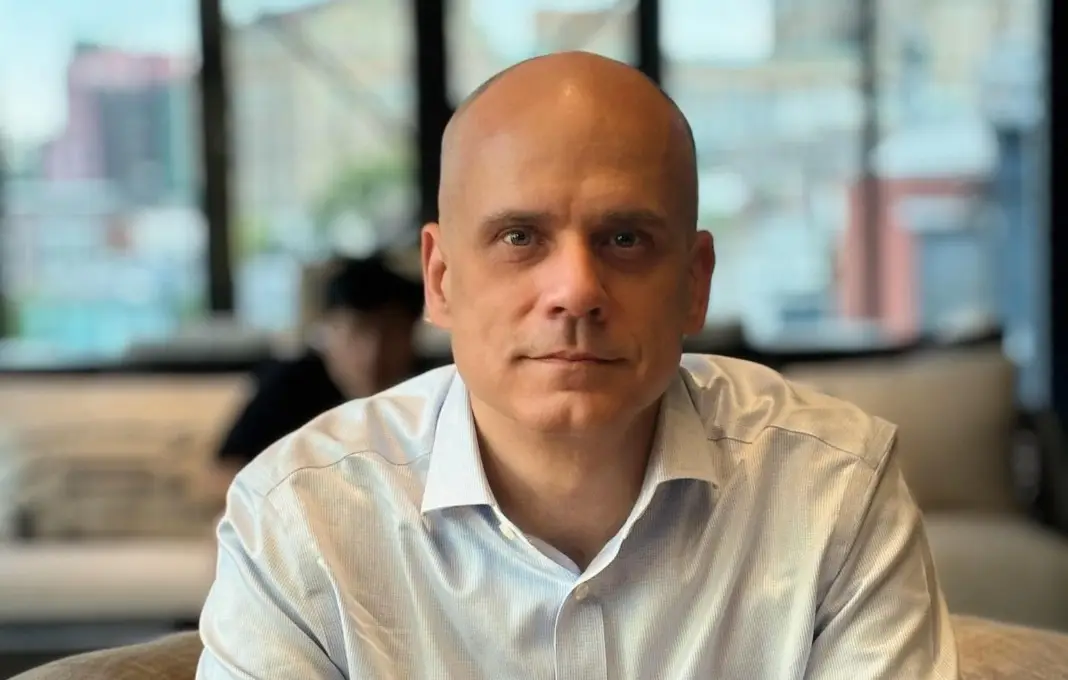
For CFO Christopher Smith, the role goes beyond financial acumen. “As CFO, I strongly believe that living my values and maintaining my integrity are my most important priorities,” he says. “There's a reason for that. Trust is the currency of investment.”
Mr. Smith is the CFO of CleanChoice Energy, a renewable energy company based in Washington, DC. In conversation with CFO leadership, we discuss defining success beyond the balance sheet and developing the next generation of leaders.
How have your past experiences shaped the way you approach your role as CFO?
For the past 25 years, I have held senior positions in leading public and private organizations, focused on helping businesses grow in smart and sustainable ways. Along the way, I've had the opportunity to develop personal best practices for leading organizations and team members to success.
As CFO, I strongly believe that living my values and maintaining my integrity are my most important priorities. There's a reason for that. Because trust is the currency of investment.
Teams look to the CFO as a source of strategic wisdom because the CFO's role is to connect company decisions with value for shareholders. However, as a leader, it is essential to remember that you are part of a team. Your effectiveness is measured by how engaged, committed, and trusting your team is in each other.
I am very excited to take on the role of CFO at CleanChoice Energy. I am committed to providing resources to help this company find stable, conservative, and appropriate investment capital so that it can grow responsibly and keep our investors and customers confident in the future direction of our business.
How do you define success as a CFO beyond the balance sheet?
Leadership is defined by the positive impact one has on people when one is not present. I try to focus through my daily actions and every interaction to develop my team and foster trust throughout the organization in such a way that in 10 years, if someone suddenly calls my team members and asks, “Would you like to work with me again?”, they'll say “yes.”
But that doesn't necessarily mean giving people what they want, it means helping them identify what they need. It is this contradiction that makes this work so difficult, but also so rewarding for me personally. I love watching people grow. At the end of the day, what really matters is the impact we have on the lives of those around us.
How do you develop the next generation of CFO/leadership within your organization?
My philosophy is that not everyone can become a CFO, but you can become a CFO from anywhere. Developing people at all levels of an organization is important not only for organizational but also for personal growth, and a committed and motivated team starts with feeling supported by their leaders.
My maxim is, don't try to teach people how to lead. I try to help them believe that they can be leaders. I start with a development plan where everyone on the team openly explores where they want to go and what they want to accomplish. From there, I help them build a program to get there, and then I try to get out of their way.
What are the specific challenges and opportunities currently facing renewable energy CFOs?
Renewable energy currently faces several challenges, from rates to policy changes and tax credits. But clean energy will be the long-term winner given its low cost and widespread availability.
Capitalism has a way of delivering the best technology. Today, we need more energy, and clean energy is the key to achieving that.
Regardless of policy, we will still deploy large amounts of clean energy this year, and this will continue to be the case for years to come. Rather than building gas, nuclear, or coal-fired power plants, which can take years to obtain permits, construct, and operate, solar power projects are faster to build and have the added benefit of being better for the environment.
But while construction of traditional energy facilities is progressing slowly, electrification is progressing faster. Batteries in particular are a big accelerator. Costs are falling and usefulness is increasing.
There's some evidence of that. Recently, I arrived at the office early and chatted with the overnight security guard. We were both admiring the delivery e-bikes parked outside, sleek but equipped with oversized batteries. The guard knew how many watt-hours the battery could hold and how long the bike could go before needing to be charged. He calculated about three weeks.
The recent spate of solar power bankruptcies has highlighted the importance of cash flow, balance sheet strength, and scale. It doesn't highlight the technology issues. This presents an opportunity for companies like CleanChoice Energy.
Consumers still want clean energy, and so do investors, but they want industrial strength. We own the generation assets and also have direct customer relationships, providing reliability and transparency at a time when trust is so important.
Our future direction is to pursue disciplined capital allocation while remaining flexible and enabling our pipeline to adapt to evolving markets. We have the dual advantage of owning our infrastructure and the agility of being a consumer-facing brand.
We have weathered cycles before, and we remain persistent in supporting clean energy projects that generate competitive returns. This mindset allows us to stay ahead of the curve as the regulatory environment changes.
