


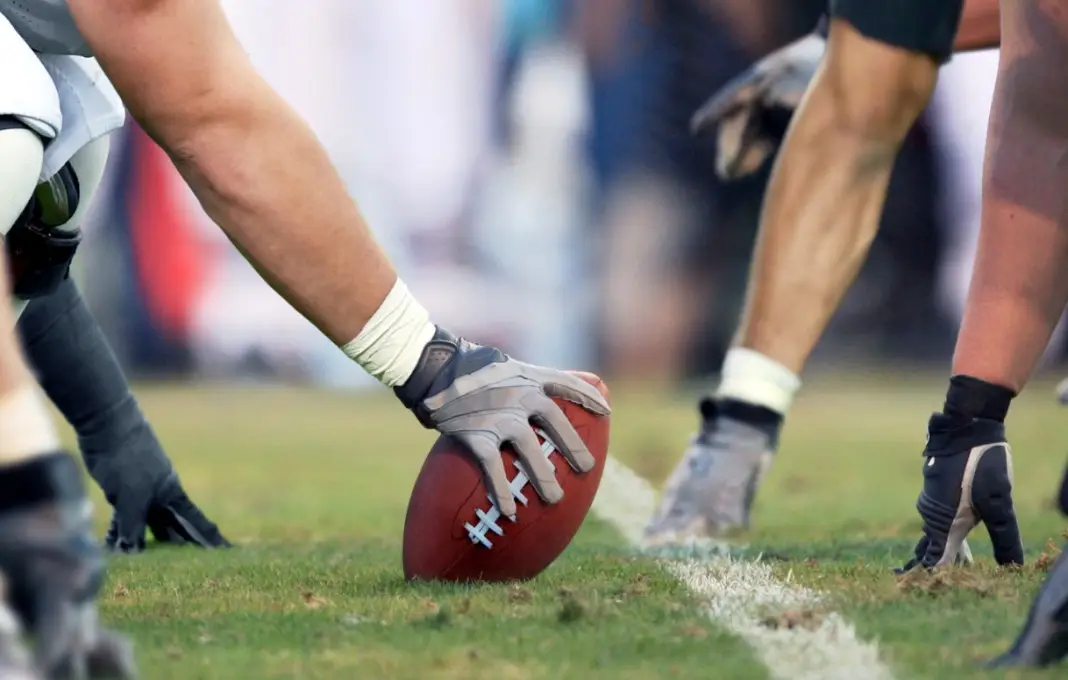
The Australian Open came to an end last weekend after a heated competition. Two teams will compete in the Super Bowl this weekend, and the Winter Olympics will be held once again.
various sports. different dynamics. Same leadership lesson.
At the highest level of competition, performance does not depend on effort, motivation, or even talent. Everyone on the court or field has them in abundance. What separates winners from runners-up is whether conditions are intentionally created for them to perform under pressure.
That distinction comes up again and again in my work with executives, but it's rarely specified explicitly.
rely on the basics
When it comes to match point, elite tennis players don't suddenly try harder. They rely on fundamentals that have been constantly reinforced, on mindsets that were formed long before the moment arrived, and on being clear about what is important and what is not important right now.
The attacking player accumulates points with each stroke and forces the opponent to react in a way that makes it easier for the attacking player to win.
The same logic applies to organizations. When performance plateaus, leaders often look first at people to figure out who to change, who to upgrade, and who is underperforming.
Talent rarely fails in strategy. That's the condition.
When performance becomes collective
When performance moves from individual to collective, the dynamics change.
Team USA's performance at the 2025 Australian Open proved that high-performing teams aren't determined by chemistry, goodwill, or even experience. Great teams are defined by a shared context, disciplined focus, and conditions that allow individual excellence to compound rather than compete.
What distinguishes teams that consistently perform under pressure has less to do with motivation and everything to do with how the environment is designed.
and there is a strategy
Whether you're a soccer fan or not (I'm not), the game and everything surrounding it is fascinating.
As Super Bowl anticipation builds, executives will hear a familiar debate about offense versus defense. Super Bowl LIX showed what each is capable of. But the real lesson is not to choose one or the other, but to design an organization that can seamlessly transition between the two.
Defense must be an impenetrable wall against external threats and keep competition at bay. Effective CEOs know that Inviolable does not mean immovable. Strong organizations respond to different situations as they arise. they ask:
What do you need to fix or enhance now, or will you have to pay for it later?
Expectation instead of reaction
Defense is not purely passive. Forecasting is required.
The most successful business owners take the time to identify and resolve vulnerabilities before progress is derailed. Similarly, attacking is not just about pursuing opportunities. It's about patiently and carefully laying the foundations needed to accelerate at the right moment. Consider:
Where do we need to start to shape tomorrow's markets?
Championship teams clearly understand their goals and the conditions necessary to achieve them, and integrate attack and defense in real time.
Persistent misdiagnosis by executives
Taken together, these examples reveal persistent misdiagnosis among executives.
When results plateau, leaders tighten execution even further, changing players or revising strategy. They rarely step back and ask more fundamental questions.
Did they intentionally create the conditions necessary to win?
This is where leadership's well-intentioned decisions quietly erode strategy.
Conditions come first
people. operation. system. How to lead. How decisions are made under pressure.
Championship performance doesn't start with effort. It starts with conditions.
The most effective executives consider whether their environment actually supports winning. It makes it easier to make the right decisions, makes the right trade-offs clearer, and creates an organization where the right actions are repeatable, especially when the pressure is highest.
