


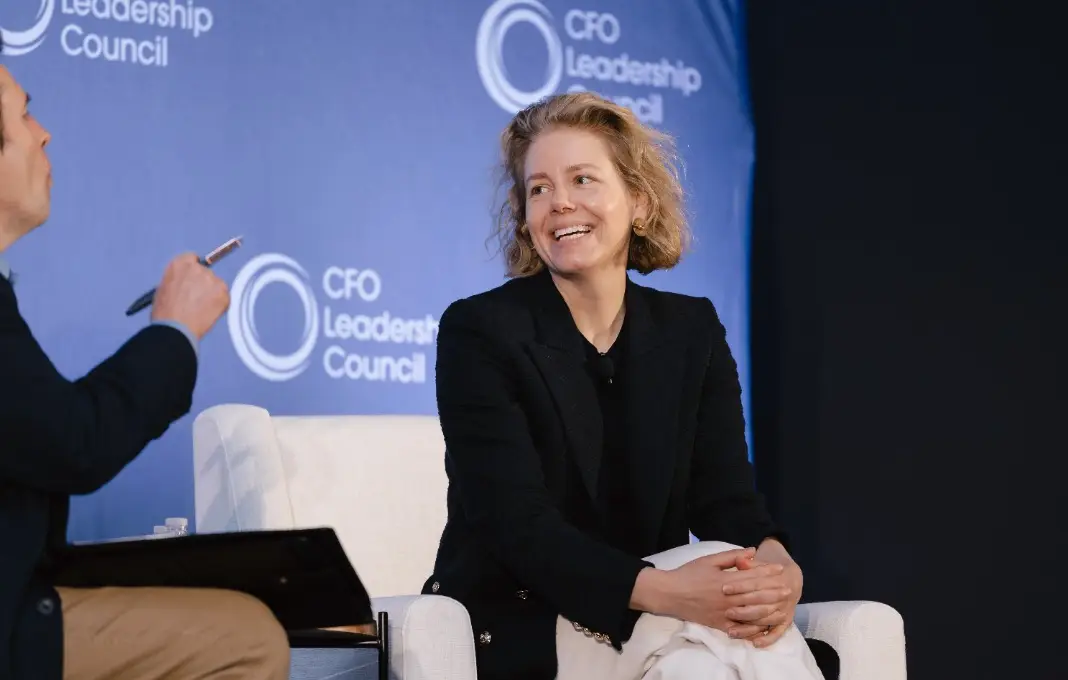
Kate Gulliver has been Wayfair's CFO for four years. But she has effectively worked for five different companies under the same roof. There was a story of a pre-IPO toddler, a super-growth rocket ship, a COVID-19 boom, a post-COVID-19 hangover, and now a pivot to growth. Add to this six years of running a human resources function, and you have one of the more unusual and profitable executive trajectories in American business.
She shared what she learned at the CFO Leadership Council's 2026 Spring Leadership Conference in Boston.
Survival reveals everything. When Wayfair finally decided to turn a profit, every decision boiled down to one question. “Will this help us achieve our goals?'' It turns out that lack of choice is a strength of leadership.
“We didn't have a choice. It was a matter of survival for the business. In that sense, I think a lot of us who had been there for a long time actually benefited from the transition because we all felt so strongly about the business and its ability to survive that we were willing to do whatever it took to do everything. We moved towards that goal. And that made the decision very clear, because we knew we had to get there, we had set a date where we had to get there, and all other decisions were made for that one goal.”
Simple compression trumps sophisticated compression. Wayfair ties almost everyone's compensation to overall performance, rather than team or region-level goals. It may sound counterintuitive, but Gulliver says this is what allows for rapid pivots, with no one fighting to defend a goal that is going into the sunset.
“We've deviated from that from time to time and come back again. Whenever we've tried to achieve a goal that's actually very team-specific, that's how we're motivated, but really we're all ultimately motivated toward the same goal. Most people… We don't want to keep in mind all these little different goals that are being adjusted. They want to work collaboratively. And if each team has their own goals, we can't pivot and change them separately.”
Finance belongs to operations, not above them. She jokes that Gulliver's strategic finance team is so embedded in the business that sometimes it's hard to tell who they're working for. Her advice for CFOs looking for more influence is: “Spend real-time time in operational roles.”
“I always say go into business, manage a small P&L or get into an operational role somewhere and volunteer to run another department or geographic region or whatever, because you get a sense of what's actually doable. The solution is that it's greatly enhanced by spending time in an operational role. When I was in consulting and private equity, I was recommending things and I was like, oh my gosh, I had no idea how difficult operations were.”
Repeat the message until you get bored. Then continue. Wayfair executives have been hammering home the same message for months as it seeks to improve profitability. When finally someone asked if it could be changed, the answer was “No, not yet.”
Staying connected at all levels of the organization, whether it's warehouse visits, store tours, or spending time with junior staff, is the secret to repetition. “I think the biggest thing is something that we as senior leaders tend to let go of a little bit because our daily lives are so busy. It's really important for leaders to actually interact and engage with their frontline teams in addition to getting their message across.”
“I meet with people from all parts of the company. I spend time with junior and mid-level people. I love talking to interns. The more leadership is involved at all levels and everyone is on the same message, the more it helps advance that mission.”
About AI: Data cleanup remains the real work. Wayfair has been using machine learning in its pricing model for years. The move to generative AI is more recent, with early wins coming when the data was already clean. For example, in an automated audit of transportation costs, small errors across millions of transactions can quickly add up.
But Gulliver was candid about how that promise has yet to materialize. “What we haven't seen the fruits of yet is that there's still a lot of data cleanup going on across the business to enable those early wins.” Initially, there was a lot of hope that AI would solve it by just dumping the data into a data lake, but “we just haven't seen it yet.”
Choose people's roles, not their titles. Gulliver's career advice goes against most conventional thinking. She chose her next move primarily based on who she worked for, rather than the scope of the role or the title that came with it.
She further narrows it down to two relationships that are more important to CFOs than any other. “I choose roles primarily based on the people I've worked with in the past, and it has very little to do with title. For a CFO, the relationship with the CEO is a relationship, and the second relationship is probably the board and the key members of the board involved.”
“I’ve been very fortunate to work with a wide range of people,” she said. “But I always chose the role to work with them, not so much for the role itself but for the opportunity to partner with them.”
