


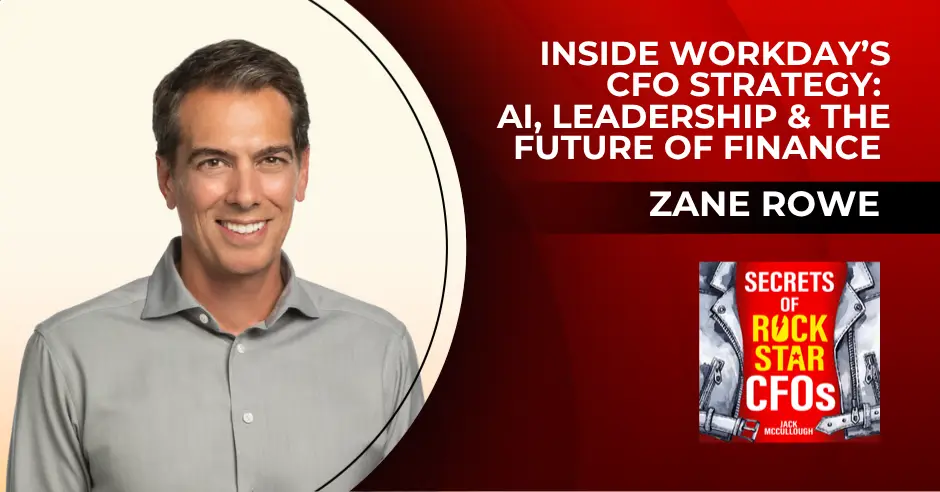
Zane Rowe knows a thing or two about change. After a career in the airline industry, ultimately serving as the CFO of United Airlines, he not only switched industries, but roles entirely, taking on a sales leadership role at Apple. “A lot of people thought I was crazy, quite frankly,” says Rowe. “It goes back to getting outside your comfort zone and taking opportunities.”
Now the CFO of Workday, Rowe is at the forefront of SaaS, staring down a new major opportunity: AI. In conversation with host Jack McCullough, Rowe shares how he’s approaching this new chapter of technology, how he sees leadership evolving and what the next generation of finance leaders must do to stay ahead: “You’re creating things faster and doing things faster, but are you changing behavior and changing the way that you drive value for your company?” Listen by clicking below. The Q&A, lightly trimmed and edited for clarity, follows.
—
Listen to the podcast here
I’m happy to welcome Zane Rowe, the CFO of Workday to our show. A little about Workday, for the five or six of you who may not be familiar with the company. It’s a cloud-based enterprise platform that helps organizations manage their people, finances, and planning in one integrated system. Zane, welcome to the show.
Thank you, Jack. I’m thrilled to be here. Thanks for the time.
It’s great to have you. I’m an overly simple guy. Do you want to fill in the blanks a little bit on Workday for probably just about everybody reading is familiar with you?
We’re fairly well-known. As you know, we’re a unified platform for finance, for HR and planning. We help companies manage their people, their money and of course, their agents. We feel like we have a great position. We’ve got over 11,000 customers. We’re in 65 percent of the Fortune 500. Over 20,000 workmates that I have the pleasure of working alongside. We’re excited about the future. A lot going on in SaaS and in AI as you well know. I’m thrilled to be here and to tell the story.
We’re happy to hear from you. I want to get into all of that, but I always like to explore the background a little bit. Zane, where did you grow up?
I grew up in Cape Town, South Africa. I spent the first 16 years of my life in Cape Town and then I moved to Seattle, Washington. Since then, I’ve lived in many areas around the U.S. I’ve covered pretty much all four corners and a big part of the center part of the country.
That’s fantastic. If I can ask, you’ve lived outside the US. Does that impact how you approach your job as CFO? Workday is a pretty global company.
It does, Jack. I spent a big chunk of my life in the airline industry and growing up in South Africa. First, it’s an incredible country for those readers who haven’t been. It is a land of contrast. I felt like even at a young age, I had so many learnings. One thing you learn is that you’re quite far from a lot of other places around the globe. To your point, I’ve always thought of myself as having at least an international view of things and a global view of the world.
That’s been what attracted me initially to airlines and then to technology. I think about the changes both physical and the idea with airlines physically having people get closer to each other. Through technology, the fact that around the globe, there’s so many opportunities with technology, to democratize technology and to help society with technology. I always felt like my years in South Africa helped me create that mindset.
That makes a lot of sense. You mentioned working for airlines. One thing that I noticed about your background is almost certainly a first for my guests. You studied Aviation Business Administration in Undergrad.
I did. I was fascinated with the complexity of airlines and the space. It was just a great opportunity to learn more about business but then to apply it to something that I was passionate about at a very young age. I practice. I don’t have my pilot’s license, but I spent a fair amount of time in aircraft with friends and started to learn to fly at a fairly young age. I’ve always had this appreciation for flight and for connectivity and what all that brought. Along with that, I wanted to be around aviation and airlines. Having that mindset was crucial to me at that point in my life. It was a great opportunity to learn more about business and then apply it to aviation and other areas of business.
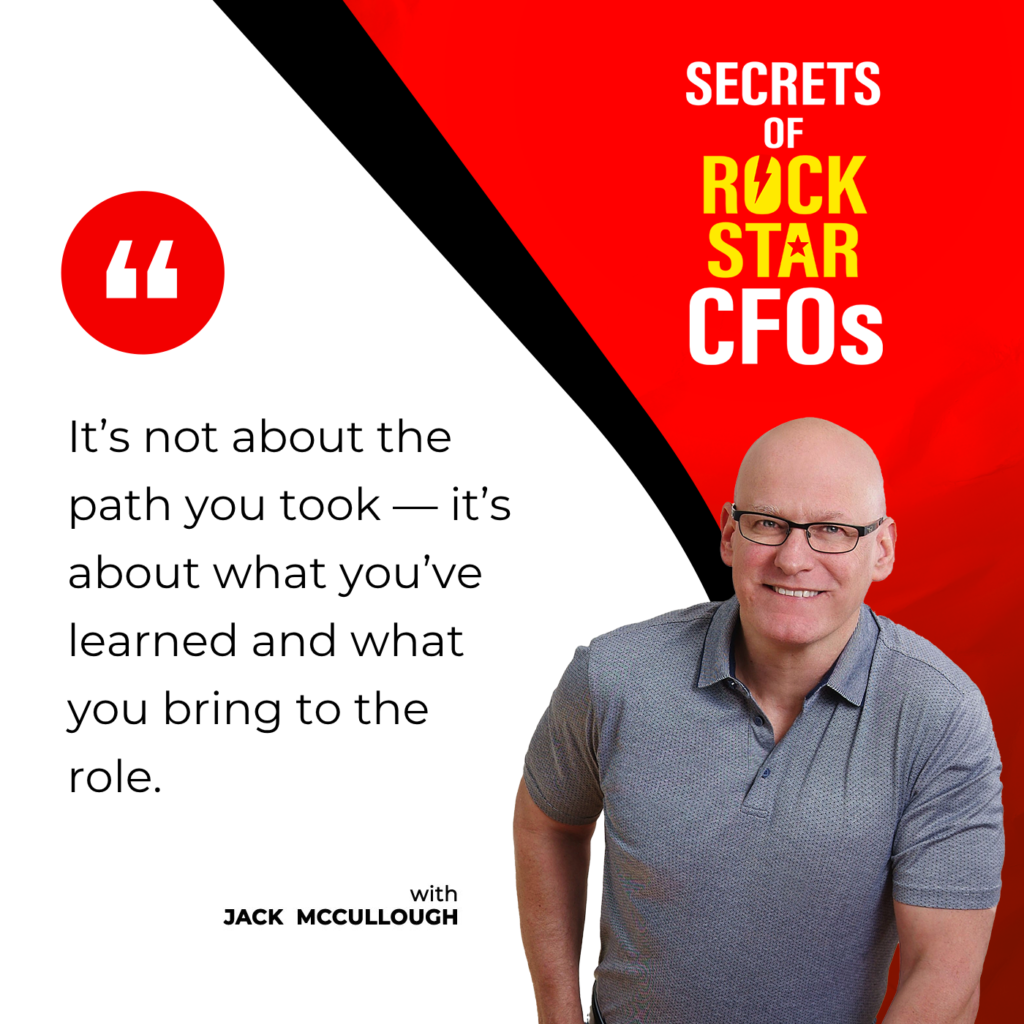
That’s great. It’s fascinating. When I was a CFO, and we’re going back a little bit, it was 98 percent of the CFOs studied accounting in undergrad, or at least it felt that way. The beauty of modern CFOs is there’s a lot of paths to get there. It’s about what you learn and what you can bring to the role.
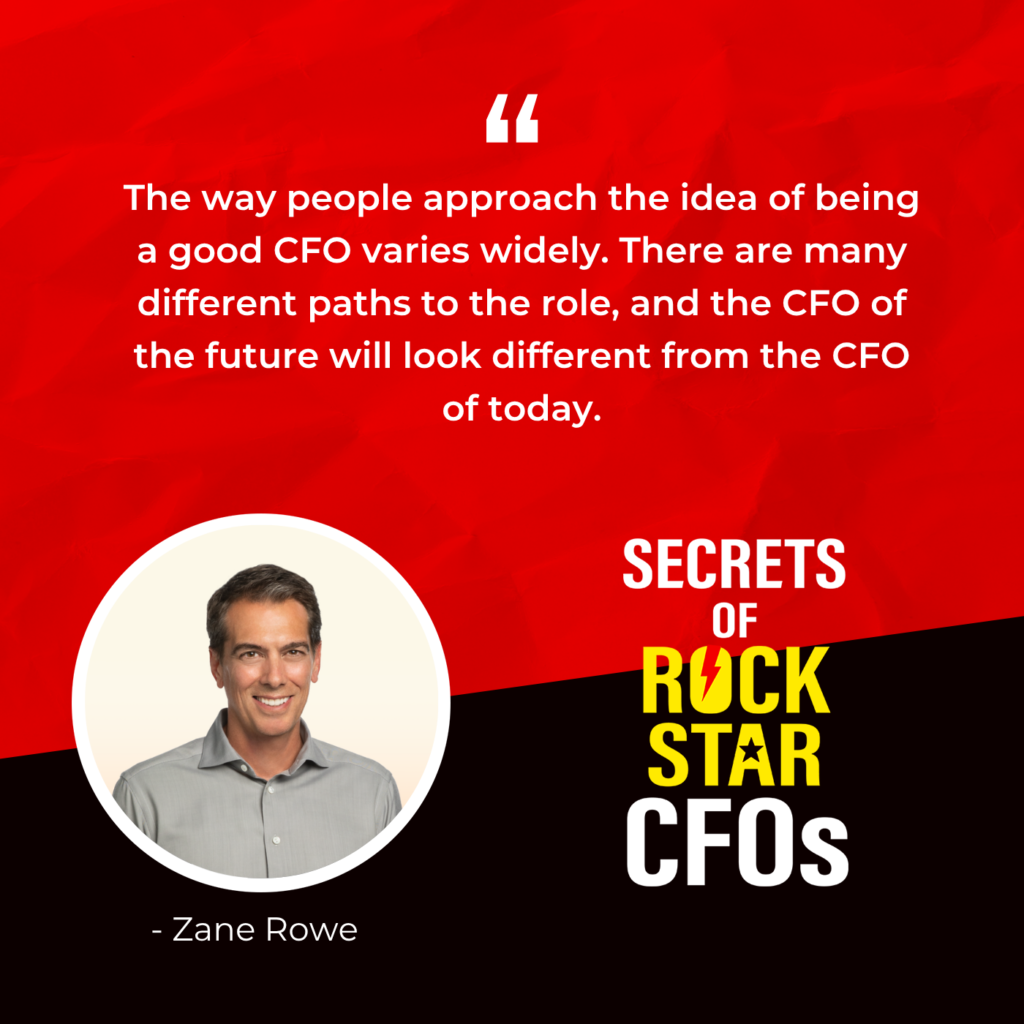
That’s exactly right. As you point out, the way people approach the idea of being a good CFO, and I’m sure we’ll get into the values that that brings and what being a good CFO looks like. There are so many different paths to it. The CFO of the future will change even from the CFO now. It’s such an exciting field. We’re obviously trying to create value in many different ways and partner with so many stakeholders. That’s what’s so attractive to me being in the role.
I’m looking at your career. You’ve just worked at some iconic companies in your career. You’ve worked at VMware, EMC. You’ve worked for two of the biggest airlines in the world and even this fruit company, Apple. I saw that from Forrest Gump. He thought he was investing in a fruit company and it was Apple. You were in sales at Apple Computer, though.
I was. When I moved from aviation, as you point out, at the time, I was a CFO at United. I had this opportunity to work for Tim at Apple in the sales capacity. A lot of people thought I was crazy, quite frankly. It goes back to getting outside your comfort zone and taking opportunities. For me, being so fortunate to work for so many incredible people and represent so many incredible companies.
It’s been a great career. I’d say these are companies that we know and they’re large. There’s so many people out there with smaller enterprises and smaller companies that do the same thing. What they stand for, their value set is just remarkable. For all of us in business, it’s such a privilege to support the underlying business. It’s just a great opportunity for everybody.
It’s fantastic. There’s some diverse companies and experiences along the way. I’m wondering when you look back, what are some of the lessons you’ve learned, leadership and otherwise, that prepared you for one of the most exciting CFO roles in the country?
I was fortunate early on in my career to be surrounded by an industry that was very challenged. I joined Continental when it was the worst week. It was essentially the worst of the 10 airlines that we tracked. Gordon Bethune put out a book Worst to First. I was just fortunate to be surrounded by people that ultimately became terrific mentors for me and the understanding of hard work and being thorough and yet being motivating.
In an airline environment, you have a broad group of stakeholders between your customers all the way through to government agencies. You’re so susceptible to everything that goes on around the globe. It was just a great training ground and learning ground for me. To be surrounded by talented individuals that showed me what good looked like as far as management skills and how you can apply yourself in so many different areas.
To your point, I’ve had the good fortune of being able to be in so many different roles leading up to the CFO role. That’s given me a broader view of what success should look like in this role and in this capacity dealing with lots of contingencies and lots of issues but also driving change and driving good outcomes for the business.
It makes sense. By the way, I love the fact that you referred to Tim Cook as Tim. He’s such an icon that when you refer to him on a first-name basis, people know. It’s like Elon or someone like that.
He’s terrific. There are only so many people in the world I guess you could use on a first-name basis. He would be one of them for sure.
Everybody immediately knew who you’re referring to. You had a great experience. I’m allowed one or two dumb questions during the course of the show and I’m about to ask you one of them. What led you to the role at Workday? What attracted you to it? Why did you make the leap?
Ultimately, it’s around people, product and purpose. Workday, being in the Valley, they always call it a small valley and it is. I knew a fair amount about the company. We were Workday customers. I recognized the values that Workday had for its customers. First and foremost, it was what the company represented. I loved the opportunity to be more global. I loved the purpose of the company and the people I had met from the company.
Most importantly for me, at that point in time when I was thinking about my next chapter, we had gone through the acquisition of VMware by Broadcom. I got a call from Carl Eschenbach, who I’ve known for many years. I always think about life being around people that you can depend on. He is of a short list that I always thought, “If I ever got a call from Carl, I would pick it up. If I just had the privilege to work alongside him doing whatever, I would consider it and take it very seriously.”
That’s what I did. It’s been an incredible journey. We’ve got a great team here to be part of where we’re going. To be part of software in a time of AI and be amongst so many smart people here at Workday and driving change. It comes back to purpose because what I believe we can do is we, as I mentioned, for both for people, for your finances and for AI. It’s just so exciting. I’m thrilled to have the privilege of working alongside some terrific people and to be growing this business. It’s an exciting time. That’s how I got here. That’s how I took the opportunity.
You and Carl worked together at VMware. Is that where you worked together?
That’s right. We had a short time that we overlapped at VMware. When I was at EMC, EMC had a big stake in VMware. I would spend a lot of time at VMware and got to know him very well over those years as well, which was a long time ago.
When were you at EMC? They started in Hopkinton, Massachusetts, not far from where I grew up. Did you live in Massachusetts?
I lived on the West Coast. I worked for Joe Tucci, just another incredible leader. I don’t always get my years so I have to fact-check this. I believe it was between 2014 and 2016 when I was with EMC. I moved over to VMware as part of the Dell Technologies transaction, having the opportunity to work more closely with Michael. It was around that time. I still lived on the West Coast and Joe convinced me that everything was moving West. I said, “That’s fine, I’ll just commute.” For a couple of years, I had an apartment in Boston. You’re right, the EMC was in Hopkinton in Massachusetts. I spent a fair amount of time there with another terrific team doing some very exciting things in the area of data and technology.
It’s such a iconic local company. In fact, my first CFO job, I was working for the Egan family.They started their own venture capital fund, Egan Man. They were the first people to take a chance on me as a CFO when I was 32 or 33.
That’s terrific. That was a great family and a big part of EMC. Very fond memories of that whole time period as well.
The local trivia question, who’s the C in EMC? Everyone knows the Egans and the Marinos, but none of us can remember who C is.
That’s right. I’m not going to put myself out there. I do remember the question at least. I don’t recall the answer but I remember the question well.
Nobody knew. The person apparently didn’t stay very long, whoever it might have been. I want to chat since by reputation, you’re thought of as a bit of a forward-thinking person technology-wise, in particular with generative AI. I’m curious because you work with a company that sells to the finance function too. How do you think CFOs and their team should be thinking about utilizing generative AI? It’s there and it’s a game changer. On the other hand, CFOs need to be a little cautious with these new technologies.
It’s a great question. I had the privilege of being around the table of 25-ish CFOs in Davos. It was a lot colder than where it is here in California. These were CFOs from just great organizations. It was very interesting because we all had an opportunity to talk about what AI was doing for our companies and our vision for AI. I’ll start out saying, it’s so transformative and such an exciting time to be in business, in general. As a CFO, AI is remarkable in what it will do for all of our companies that every CFO represents but also what it will do for the finance function.
To your point, the elements that are often looked over would be the importance of the data set. It’s having a good system of record, thinking about the environment where 90 percent confidence in the answer is adequate. In fact, it’s just incredible. Yet, other examples in finance where 90 percent of confidence is terrible. Simply, when you think about SaaS and you think about the need to be 100 percent right, 90 percent doesn’t cut it. You could spend a lot of energy and time trying to automate something or apply AI to something that requires something more than just that.
Every company is at a different stage as it comes down to where they are and what chapter they’re in as it comes back to their AI journey. As finance professionals, it’s important to recognize what’s the broader ROI of these investments. There’s a huge opportunity cost to not leaning in and doing something with AI. How do you balance where your organization is, where your data is, where your people are? How do you think about navigating this journey alongside all of the people that you work with?
What AI is driving is a lot more collaboration across the C-Suite and for companies from the board level all the way through every individual in the company to think about change and to think about how quickly change can happen in companies and in industries. How there will be a lot of challenges ahead, but also opportunities ahead using the same technology. It’s a very interesting time to be in the market for sure.
We live in the most interesting time ever.
No doubt.
I’m sure the next generation will talk what we’re going through.
They’ll say the same thing but by that time, we’ll be retired.
My dad would have said he saw the first man walk on the moon. That was the most interesting thing in history. He’s probably got a valid point with that one, I suppose.
I would agree.
In a relative term. Are there any ways that you think CFOs should avoid AI, at least now, until it’s better and sooner? Things just say, “We’re not going to do this. Absolutely not.”
It’s a matter of prioritization. I wouldn’t say avoiding it. For CFOs, you always come back to build, partner, buy. Thinking about every company has a different AI journey and there are lots of again opportunities but also challenges. There are other companies that can either be helpful to your journey or otherwise could try to disintermediate what you’re trying to do.
For CFOs, it’s having a good mindset about where you are in the business, where the ROI is on those investment dollars and where you should be building things yourself or coming up with something more bespoke to your industry or to your company. In other cases, where you should be looking to partners to partner with or vendors to provide that AI and provide that engine that’s going to help accelerate your growth and your value. That’s the key to all of this.
It’s happening at such a fast pace that there’s no harm in pivoting at some point because what seemed like a good decision in 2025, if you look at how the technology has already evolved over the last 12 months, may not be the right decision for your company. Again, it’s having a lot of communication, having a lot of coordination, and then being very thoughtful about prioritization. The opportunity cost to going in the wrong direction with the wrong technology is fairly high. You have to think about pivoting and being agile in all of your decision-making.
I tell people, “I’ve made predictions about generative AI. You could have made a lot of money if you just predict, if you just bet against everything that I’ve said.” I’m over 37 or something like that. I’ve not gotten it right at all. It’s great to hit your perspective on it.
If people were that good at it, there’d be a lot more people betting with their dollars. It has to stand the test of time. As you point out, it’s very difficult to sit here and say, “What do things will look like three to five years from now?” You do know by doing nothing, they won’t look good. You’ve got to lean in. You’ve got to leverage it. There’s so much learning.
We’ve got a top-down approach to thinking about AI, learning with AI, making sure that it’s democratized, that everyone has the tool and everyone can learn from each other. That’s the period we’re in where no matter where you are in an organization, if you’re not thinking about it each and every day, you’re falling behind. Again, there’s always opportunities to pivot into your point. You may not have the right technology at the right place. The learnings from that will make you so much smarter about your next decision. That’s what’s most important.
That makes sense. I’m curious just because of where your company’s positioned. How is AI changing Workday’s product roadmap? It has already changed, I assume. Your customers have to be excited about it.
It’s a great question. We listen closely to our customers. We understand their needs. It’s less about just building it for the sake of building it and more about understanding how can we truly change outcomes. How can we help them become better at what they do in this area of people and finances and then planning. We lean heavily into AI as you can imagine. Every software company and technology company is doing just that.
We’re very fortunate in that we’ve had a founder that thought about this many years ago. We talk about having used AI for over ten years. We’ve at least got a platform that we can leverage off. As we think about things like agentic AI and helping our customers improve their lives, that’s the driver behind it all. We’re throwing tremendous amount of resources with some incredible individuals in building all that for our customer base.
It’s something we think about consistently and continuously. Not only as users of AI across the company, but in building AI. We’ve got incredible talent that are building some fascinating things and that whole interface. Not only with our product. How you think about coming to work, what you do at work, how we can help that, improve that is part of our motivation.
One thing I want to ask you. I’m a CPA earlier in my career. It’s not a slim on them but I love when my CFO guests aren’t CPAs because they measure things differently and think about it differently. When you think of interesting ways to measure and define success at your company, what are some of the things that you think of that maybe a little bit unconventional or non-traditional?
In the finance realm, it is about collaboration, coordination and what you can do as an incredible team. You go back. We started with how you think about growing up in school and having that imagination to help others in what they’re doing. You never leave school as much as you think you do because you’ve got to continuously learn more. People that I look up to and mentors that I have. They’re consistently learning and challenging themselves in different ways.
As a company, you need to do the same thing. You can never be pleased with status quo. That’s the environment that we’re working in at Workday. I’m sure for all of your readers, it’s the same environment that they’re in. I would say it’s getting out of your comfort zone. It’s continually challenging yourself to think about what are the new projects and what are the new things we could be doing.
For us, we’re very inquisitive. We also acquire a number of companies. What I see happening with companies of all sizes, these incredible individuals are building some incredible products. Part of our roadmap is not only doing that ourselves, but also acquiring these technologies to accelerate our path. Our mission being making your workday that much better and driving value for our customers.
That’s been part of our goal and our mission. Whether it’s building our own products and leveraging AI in that way or otherwise making some of these acquisitions. Some of the ones we’ve done on the recruiting side are just fundamentally different to make that recruiting experience so much better. To lower attrition and to think about the value of the workforce.
For companies, your most important asset are your employees and is the workforce that’s driving value for your company. We’re helping drive that. As I think about the roadmap and how we apply AI to that, whether it’s helping people learn better, helping people recruit better. They’re all parts of operating a business that ten years ago, you had to roll your eyes.
You think, “I’ve got to do this. I’ve got to do that.” There are forms to fill out and things you have to do. You can automate that through AI and make that so much more intuitive and then help employees along that journey as they continue to drive their careers. It’s an exciting time to be involved in this space. That’s what drives us and motivates us.
That’s fantastic. One question occurs to me. You’re working for Workday. You’re at the intersection of finance, but HR and planning. I wonder if working for a company like that, does that impact how you approach your role as a CFO? It’s what you do for a living.
It does. I feel like the bar is high internally. We consider ourselves Customer Zero, whether it’s my fellow workmates in finance or otherwise the HR team in particular, which is great. I have an opportunity and I spend a lot of time with our product teams. I hear about things that they’re thinking about. It helps you benchmark maybe more than you otherwise would.
Also, you recognize that there are a lot of incredible technologies out there, a lot of incredible people building some exciting things. That comes back to the M&A side of what we do. It’s not only being motivated by your own technology. In our case, using our own technology and challenging them with, “How can we make this better? What customers are using this part versus that part?”
I also have to recognize. We in the technology space don’t represent a broad base of customers. I mentioned earlier that we’ve got 11,000 customers. They’re in distinct industries. We’ve got great sectors and verticals that we’re leaning into. I also have to balance what I call my needs selfishly with those of all the customers out there.
Many times, what they’re building may not be something that we need high on our prioritization, but helps a lot of our customers, which are of many different sizes, sectors, and industries around the globe. There’s a good balance there. I love the dialogue. There’s no better place. One of the attractions for me being in this role was to have a tremendous team. Also, to be thinking about and looking at the future through our own technology, thinking about what we can do better, and how we can make our customers lives better.
The question I get asked most often by my members is, “How do CFOs build that meaningful strategic relationship with the CEO?” CFOs have said for a long time, “My most important relationship is with the CEO.” Rightly so. I’ve observed since 2023 or 2024, for the first time, CEOs are reciprocating that in large numbers. How do you build that strategic partnership? You’re almost equals. Not quite. Sometimes, the CEO has to trump a little bit. How do you support and drive value together?
The CEO always trumps. That’s the good and the bad with that job. Many times, I go, “Here’s my view. Ultimately, it’s a CEO decision.” I hope to, at least, bring about a couple options. To your point, it’s a very important partnership. A company cannot be successful without having a CEO and a CFO with a substantive relationship. That means the opportunity for me to tell exactly what I think. Not to figure out how I support his decision but to have an open and transparent dialogue around how I view things. I also feel like it’s my responsibility.
What I love about the CFO role is our stakeholder base is so broad. I have access to the board, investors, and workmates who many times will say things to me that I’m not so sure they would be as unfiltered to any CEO candidly as they would to me. I feel like it’s the CFO or anyone in finance. It’s your responsibility. I always feel like in finance, all of us are mini-CFOs. You have to have that mindset of like, “I want to drive value objectively for the company and what’s the best way to do that.”
To your point, relationships are so important. It’s not just the CFO-to-CEO relationship. It’s making sure that I have board members I can call or have dialogue with that I can have transparent conversations with investors and with other employees and think about customers. All of that coming together to give a different perspective, and many times either, it’s a different opinion.
To work collaboratively in helping set an agenda that can create value and create growth for the company is important. That dialogue and working together. I’ve had the benefit, as I mentioned, of working with some incredible CEOs. Each of them are a little bit different in their own ways, but it’s managing how you convey whether it’s a view, data, dialogue or otherwise. Meetings for them to help them make better decisions on behalf of the company and for the company.
That’s an important part of that relationship. It’s an important relationship, but it’s one that, again, I never feel like I have to be there to always be positive or say, “Great job on this.” I’ll often be the one coming up and saying with some constructive ideas or otherwise, a thought on how we could do better. It’s a good relationship on both sides.
That’s the main thing. It’s got to be in both directions. Zane, one thing I’ve noticed. You’ve been on a number of Boards of Director seats during the course of your career. I believe you’re on the Board of eBay. I’m curious. It’s two questions to that. The first one is, how does the CFO get those board seats? They bring a lot of skill to it. The other thing is, you’re on the board and you’ve been on the boards of some great companies. Does that impact how you approach your day job of being a chief financial officer?
First, I would say it does. I would encourage management teams out there, if you have an opportunity for anyone on your C-Suite to be on a board. I learned so much from my experience, both at eBay, as you mentioned, and in prior boards. It’s an opportunity to be at the other side and to have a situation where you’re asking questions. You’re thinking about things with a slightly different lens than if you’re sitting in the CFO seat. it’s incredible experience.
I’ve had the good fortune of having lots of different roles within companies. I think of the board experience as being one that is invaluable and clearly makes me, in my opinion, a better CFO because of it. To have the privilege to sit on the eBay board is unbelievable. It’s an international company. It has all the values that I love with companies. It helps people around the globe. When you think about what that company stands for, I’m just so proud of. It’s not just the employees of eBay, which I’m obviously proud of it. The consumers, all the transactions, and all the people who make a living out of that marketplace. It’s remarkable. Some of the stories you hear are just outstanding.
Continuing back to your first question on how you get positions like that. It’s being able to be out there. As a CFO, they tend to line you up for being on the audit committee. If you are a CFO or in finance, you don’t always have to be a CFO. Boards benefit from people in finance at different levels with different levels of experience. You should expect to be tagged to be on the audit committee, which is also great, because there’s no better way to continue to learn and continue to understand what’s happening in the area of accounting and finance.
The responsibility on an audit committee is great. It’s a privilege to have that opportunity to sit on one. I will tell you, it also takes time. You have to take that role very seriously, learn a lot about the business, and continue to be current in all things finance and accounting. Expressing a desire to have that be part of what you do is the first step. Continuing to have good networking and let people know that you’re interested in different opportunities is a good way to be on that path to getting a board seat.
That makes sense. I want to say, you’ve got a lot going on. You’re CFO of a very visible company and on the audit committee of a very visible company as well. All work and no play makes Jack a dull boy, as they say. How do you maintain that healthy work-life balance so that you’re not just working 90 hours a week and burning yourself out by the time you’re my age?
It’s a great question because with all of automation and all the things that are supposed to make us more productive and have us with all the spare time, I find that I don’t have a lot of it. I will say as I get older, I start to learn more about longevity. Thanks to all these devices. I wear an Oura Ring at night and sleep on an Eight Sleep mattress. All these things I start monitoring myself. I’ve prioritized my own well-being and health more than I ever have.
Earlier in my career, I took great pride in telling everybody how I’d survived on four or five hours of sleep. When you’re in the middle of a deal for M&A, you’re just charging and going. You felt proud about all of that effort, energy, and work. You step back and you think about your body and you realize this is a long life. You’ve got to balance, to your point, both work and then other aspects of life. If you’re unbalanced, you think you’re doing good work and hard work. You maybe are putting the energy in but you’re not getting the output. it is important to have that balance.
I would say, I haven’t struck that balance just yet but I continue to work on, first and foremost, getting good sleep. That’s incredibly important, then getting out and exercising. I love anything on two wheels. Whether it’s mountain biking, motorcycling. I love the water. I try and kitesurf in the summer when I can. I love being outdoors. I’m so fortunate to be at a place where I can get outdoors a fair amount regardless of the time of year. That’s part of that balance.
I like to, at least, work out when I can and be as healthy as I can, watch what I eat, and try and strike that balance. It’s becoming more and more important that people start to think about all elements of health, whether it’s physical, mental, and all the other aspects of everything you do, regardless of where you are career-wise. There’s a lot of pressure out there.
As much as we’re excited about technology and AI, it puts different stresses on people. This idea that all of a sudden, you’re that much better and faster. Life is become more complicated for a variety of reasons. it is important that you strike some balance. For everybody, it’s a different answer. It’s something I’m focused more on than I probably ever have been over my career.
That’s great. I don’t know too many CFOs who’d never have those crazy periods where, “I’ve got to get this done. I’m not working out for a couple of weeks.” Whatever it might be. Taking a company public with going on the road show. “I’ll try to exercise but I’m going to forgive myself.” If only you can make the effort. It sounds like you love being in the outdoors. It doesn’t take that much. I tell people 30 minutes, 45 minutes. I’m into a gym. I live in a cold city. It’s three degrees outside so I’m not doing anything outside. I’ve just gotten used to a moderate size set of dumbbells and a yoga mat. I have enough to keep reasonable health.
For everybody, their motivation is different. I love that. I’m the same way because at least, I like to dedicate some time. I feel like even if it’s twenty minutes, just the act of doing it and the feeling you get from doing that puts you in a slightly different mindset. Doing a little bit of learning. I listen to a lot of audibles on eating better, having a healthier mindset, and all these other things that help contribute to that. I feel like I’ve still got a lot to learn. I can always do better. If it’s just a small thing here and there, it makes such a difference. You just feel so much better with it.
That makes a lot of sense. I’d love to get your perspective on the ongoing role of the CFO. How do you see the very nature of financial leadership changing? Corollary to that, is there any advice that you would give the next generation of CFOs? Maybe those who were six months to two years from getting their first CFO jobs, even those who are in their first role.
First off, with the role changing, it continues to become a bigger part of the organization in a more collaborative way. When I think about all the things that we’re trying to do in finance, it involves so many different groups from IT to functional areas and all of that. That role will continue to be just a partner to, I would say the CEO, but it’s a partner to everyone in the company. You should feel like having that CFO role to help you get better insight, to help you think about different scenarios, and help you plan for creating value, creating growth.
The role will continue to evolve to be more like that, specifically with AI being part of that. AI is the resource that you wish you had years ago and now you have at your fingertips. To help create an environment, AI is only great if you use it in a smart way. A lot of people are using it in interesting ways, but you’re not necessarily driving a change in behavior or a change in what you do because of it. You’re creating things faster and doing things faster, but are you changing behavior and changing the way that you drive value for your company? Many times, the answer to that is yes. In other cases, you have to think about that.
For CFOs of the future, this is an incredible time to be in business. I would say continue to challenge yourself, continue to learn and realize that there are no bad turns. It’s interesting. We look back on our careers. You can point to these different elements and people go, “That was great the way you thought about this and spend time in sales and operations and things.” I would tell you, incrementally, it helps. It helped me be a better CFO because of that experience.
It was me getting out of that comfort zone and forcing myself out of the comfort zone. Whether it’s changing industries, changing roles that ultimately culminates in just being a better leader and ideally learning a lot more. It comes down to that. Having a tremendous team that you can leverage and having a group of people that you can call that can motivate you when you need motivating, where you can help. Helping others is a big part of that. Be at the other end of the phone for people that need help.
You getting better is about helping others that are still earlier in their career. I love spending time with people still in college. I was on a Zoom with somebody who’s thinking about an internship. I said, “Here’s some ideas. Take it for what it’s worth. Here’s just some perspective.” If you can just help individuals in different ways, it makes for a better career and helps you internally think about things yourself.
You spend time with people early in their career. It will help fortify your own view on where you are and how you think about your next steps. It’s no better time to be in business. Thrilled to have the privilege to be a CFO of such a great company. I recognize how lucky I am, candidly. What a great opportunity this is.
That’s great advice. More importantly, I know that the readers will view it as great advice. Thanks so much. Zane, you have a lot going on. I do want to take a moment and thank you for being here. this was a great conversation. With that, I’d like to give you the opportunity to give you your final thoughts.
Thanks, Jack. I’m thrilled to be here. Again, for me and for your readers, I couldn’t be more excited about what the future will hold. As with any time in history, I know there are things to be excited about and then there are obviously concerns. Whether it’s AI and just learning and having that experience, there’s no better time to be in business. The changes that you’re impacting, no matter where you are in an organization or how you’re thinking about your future career, things are happening at a pace that we just haven’t experienced in human history before. Embrace it, challenge yourselves, look ahead, look forward, and enjoy the journey.
