



Boards have governance continuity issues, and I've been watching how that plays out for 20 years. When board seats change, the background of directors is often forgotten: why strategies changed, how decisions were reached, and which problems have already been resolved.
Incoming board members receive articles of incorporation, a strategic plan, and recent meeting minutes, but they do little to help them understand what is actually important. They may spend time listening in the first meeting and then raise questions that the board resolved months ago because the basis is buried in the record.
Records may remain, but the context behind them is often lost when board members change. Continuity in governance means inheriting the reasoning and decision history so that new directors can build on what came before. The need has become more urgent as boards deploy AI tools faster than they can develop policies for their use.
Why directors should use AI before boards manage it
Imagine a meeting where everyone is quietly trying to reconstruct decisions made three quarters ago. Some people ask when was the last time the board discussed committee composition. Someone else is trying to remember what happened at that compensation committee meeting. No one has a clear answer, unless someone in the room happens to remember it.
If you ask the system what the board decided and why, it will not give you any answers. It's not a lack of information. I lost my memory. Most board portals preserve records but leave it up to directors to reconstruct their meaning.
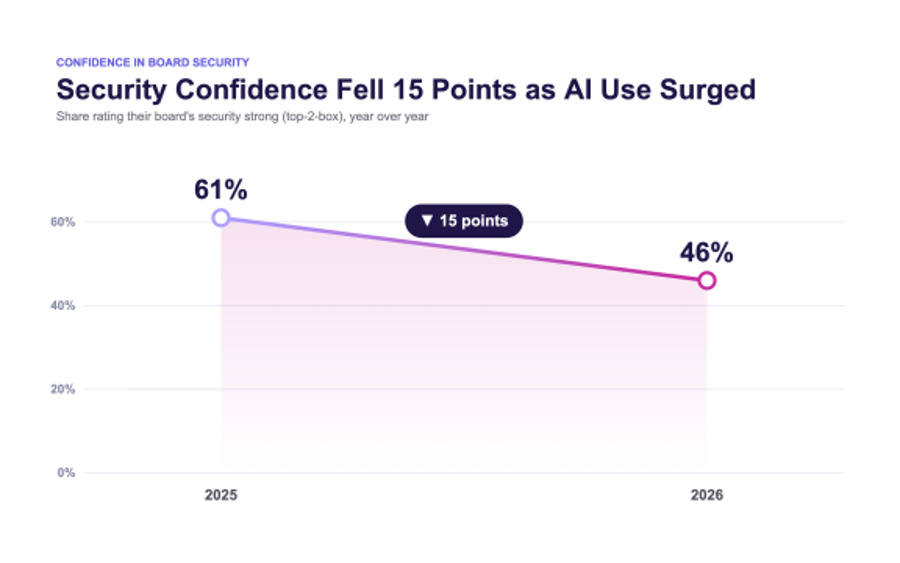
So Bode looked elsewhere. According to the 2026 Board Effectiveness Study, 92% of boards have used AI tools in board operations within the past six months. However, 63% of boards do not have a formal policy governing what goes in, what comes out, and who is responsible. 38% have no guidelines at all.
As I've said before, directors adopted AI faster than boards managed it. Some directors put confidential board information into tools that are not approved or monitored by the board. That's the real risk. It’s not that directors are using AI, it’s that they are using it without oversight, potentially exposing financial data, privileged legal communications, and M&A strategies. The result is the same memory issue, but now migrated to a tool without board monitoring.
Governance What AI should do: Augment judgment, not replace it
Board AI should enable directors to recover the context behind decisions without having to make the decisions on their behalf. Boards exist to exercise human judgment, challenge management, and maintain accountability to stakeholders. This technology is most useful before deliberations where it can bring relevant records forward and assist directors in their preparation.
A standalone general-purpose AI tool inherently has no idea how the board voted on similar issues two years ago or which directors have handled similar decisions elsewhere. That context lives within the Board's own records and experiences.
Three layers of contextual governance for AI
Governance-focused AI requires three layers of context that general-purpose tools typically lack. Governance IQ, the intelligence layer within OnBoard AI, is designed around these.
- Industry: Markets, regulations and events that are reshaping your sector
- Organization and board history: Minutes, board portal records, board books and decisions over the years.
- Individual expertise: What each director and executive actually brings to the table
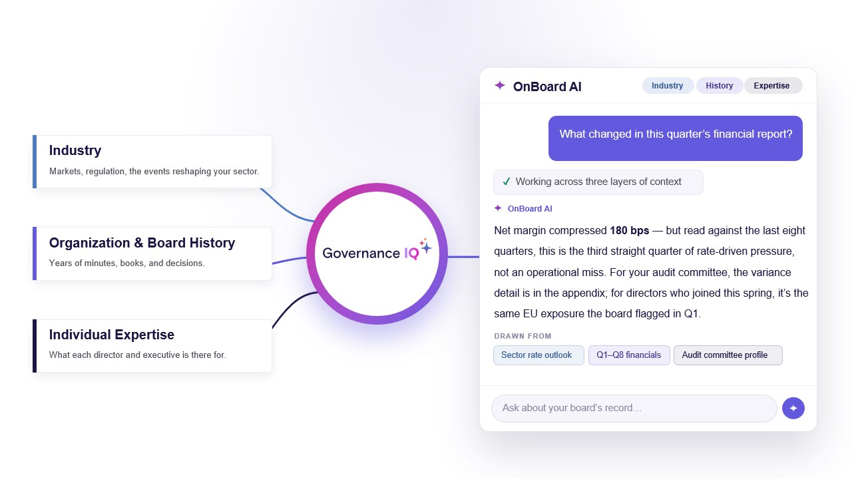
A first-year director can ask, “Tell me about the past two years,” and get an answer built from all three years. A 10-year veteran can track how long-running issues have evolved over multiple board books. A record of each meeting is added to provide directors with more relevant context the next time a similar issue occurs.
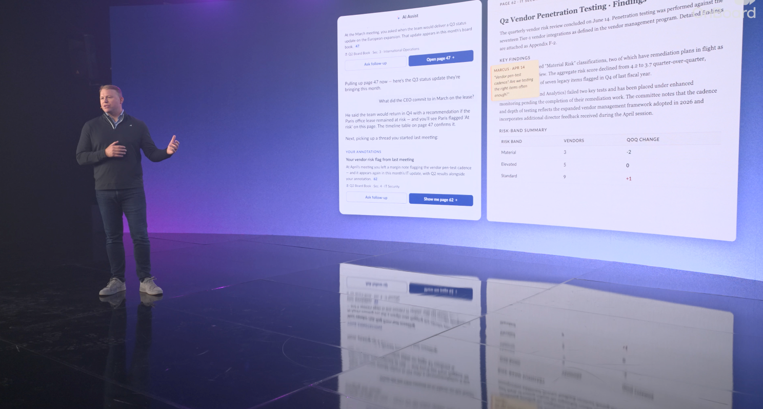
Directors open the board portal before a meeting and see, “Here is the latest European expansion question asked in March. Found on page 47.” When the issue returns to the agenda, the portal will display the director's previous question again. Directors can also ask what changed between last quarter's financial report and the current one, or how the board approached a similar decision three years ago, without having to reread the board's books for years.
Continuity also depends on what happens after the meeting. Closing the loop on a decision depended on someone remembering to follow up. Now, actions are logged the moment they are assigned, with clear ownership and a due date. Once the next agenda item is finalized, the follow-up will already be documented and ready for review by the board.
How Governance AI Preserves Organizational Memory
Governance platforms connect historical records of boards, giving new directors access to previous decisions and reasoning. Directors still make decisions. AI makes it easy to find and use an organization's history.
AI used to work on the board must respect the same permissions as the board platform itself. OnBoard AI runs in a closed permission-aware environment, so Directors only see the content they are authorized to access.
To see this approach in action, watch the full keynote, “The Future of OnBoard AI,” on demand.
FAQ
Why can general-purpose AI tools pose a risk to board operations?
General-purpose AI tools are not inherently connected to a board's authorized historical records or governance workflows. Entering sensitive board material into external tools without approved policies or oversight can increase the risk of financial data, privileged legal communications, or sensitive strategies being exposed. Tools may also leave the board without a clear record of how they were used.
How is AI embedded in board management platforms different from general-purpose AI tools?
When AI is built into a board management platform, it can enforce the board’s existing authority and derive context from the historical record being managed. This allows decisions, action items, and discussion threads to surface within the board's existing workflow.
What should boards look for in a governance AI platform?
Boards should assess whether the platform respects existing mandates, has a basis for answers in the organization’s board materials, stores sensitive information within approved workflows, and provides a clear record of how AI is used.
