


Confidence is contagious. So is uncertainty.
As more first-time CEOs step into the corner office, they're embracing the role with remarkable confidence. Many believe they are well-positioned to lead their organizations through the next wave of disruption and opportunity. But the board isn't so sure.
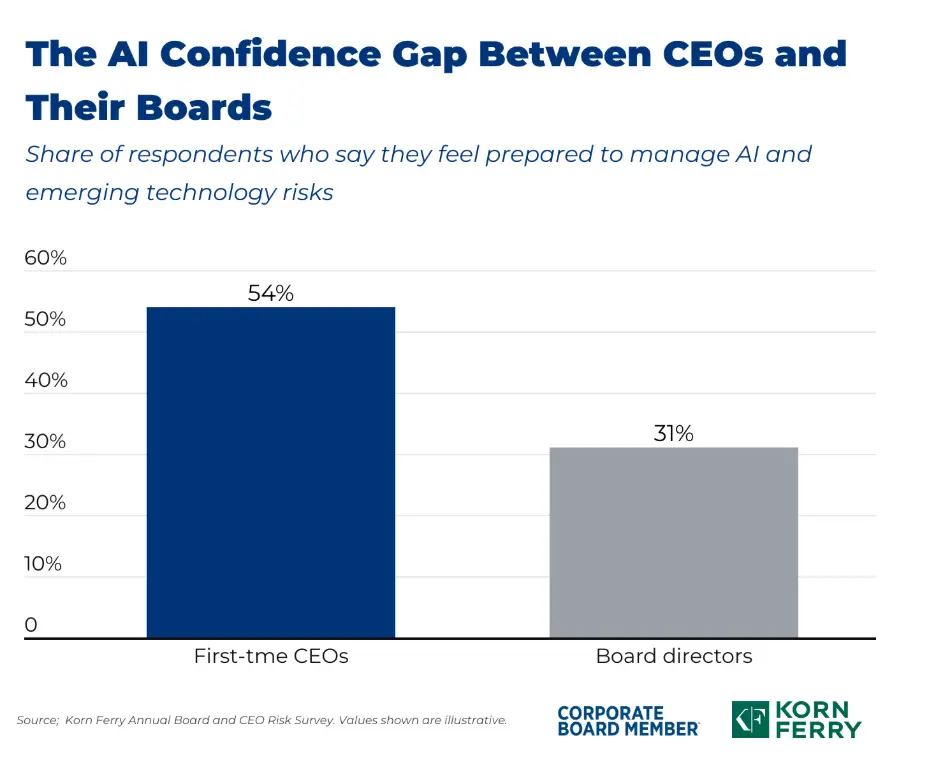
Data from Korn Ferry's annual Board and CEO Risk Survey reveals a widening trust gap between new CEOs and the directors tasked with overseeing them, especially when it comes to technology, AI, and future risks.
More than half of first-time CEOs feel prepared to manage the risks of AI and emerging technologies, and many are actively seeking engagement with colleagues to learn, adapt, and accelerate. In contrast, less than a third of directors express the same level of trust. Many companies are still grappling with understanding both the opportunities and risks inherent in large-scale technology investments and AI initiatives, while ensuring executives focus on the right priorities.
This trust gap is most pronounced between first-time CEOs and the boards they serve, and it may be a matter of context rather than competency.
One explanation lies in how many of today's CEOs have taken on the role. A significant share was elevated or hired under accelerated and, in some cases, reactive circumstances rather than through deliberate, long-term succession planning.
CEO turnover over the past two years has been at an unprecedented pace due to economic instability, geopolitical instability, activist pressure, and rapid technological disruption. Some tenured leaders have voluntarily stepped down, not wanting to lead the organization into yet another generational transition. Others were forcibly evicted.
As a result, many boards appointed their first CEOs earlier than expected and with less preparation than expected. Survey data underscores this reality. Only 15 percent of both directors and CEOs believe their organizations have done a good job of preparing new leaders for their roles. Fifty percent to 60 percent cite starting succession planning too late as the single biggest challenge in recent leadership changes.
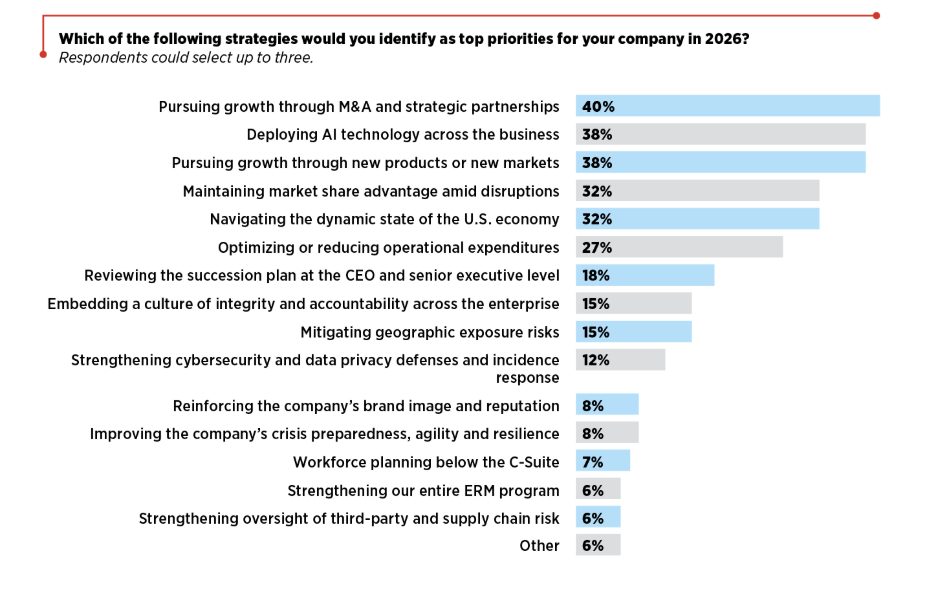
And despite these numbers, the latest Directors Thoughts report found that only one in five boards listed reviewing CEO and senior leadership succession plans as a top priority for 2026, down from 37% after the pandemic, suggesting that boards may have moved on from succession discipline just when the effects of weak planning are becoming most evident.
At the same time, changes are not limited to executive suites. The boardroom itself is in flux. Last year, 418 directors left S&P 500 companies, an increase of nearly 12% from the previous year. Meanwhile, 374 new directors have been added and some seats are vacant. In many organizations, first-time CEOs and newly appointed directors are still getting to know each other and navigating roles, expectations, and trust in real time.
Again, the data speaks for itself. Less than 15% of CEOs and directors say they feel fully connected and trusted by each other. Less than a third reported actively building strong working relationships.
In such an environment, it is difficult to maintain confidence on either side. Closing this trust gap will be one of the most important governance challenges boards and executives will face in the coming years, especially as organizations evaluate and fund large-scale technology and AI investments.
Encouragingly, both CEOs and directors acknowledge the problem and acknowledge the lack of collaboration. This transparency is an important starting point.
There is also substantial agreement on what matters most. Both groups believe that new leadership will position the organization to better address rapid technological change, economic instability, geopolitical risk, and evolving talent needs. They agree on the importance of building AI fluency and engagement across the workforce as the foundation for future success.
One thing is clear from the data. Changes in leadership during times of turmoil always involve risk. But increasingly, boards and CEOs are understanding that the upside—fresh thinking, new capabilities, and renewed energy—can outweigh the uncertainty. Confidence, like transformation, doesn't come all at once. It builds gradually and suddenly defines the future.
