


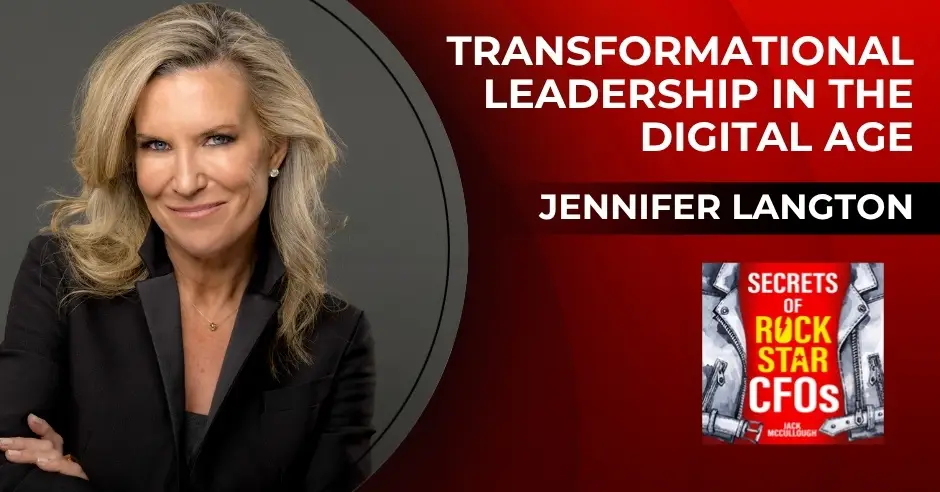
Jennifer Langton has built a career through strategic pivots. Beginning in the finance sector, eventually earning the CFO seat at Atari, Langton switched gears for an operational role as senior vice president of player health innovation at the NFL. Now, she’s become a strategic advisor to organizations undergoing transformations of their own.
She credits her time as an athlete for the mindset that helped her succeed, no matter the title. At 13, she was the only female player on an all boy’s lacrosse team, and went on to join the Youth Hall of Fame in Long Island and play for a national championship team at the University of Virginia. “That had changed me, breaking barriers, but my own identity, understanding my skills and how to play them forward. That certainly helped me in the many years ahead,” says Langton.
In conversation with host Jack McCullough, Langton digs into her journey to leadership, her most recent career pivot and how to inspire change in a digital world. Listen by clicking below. The Q&A, lightly trimmed and edited for clarity, follows.
—
Listen to the podcast here
Welcome back, Rockstars. You’re going to love this episode. We have one of the most intriguing guests that we’ve had. Jennifer Langton is the former CFO of Atari and joined the NFL as the Senior Vice President of Player Health Innovation. She has led major transformations by leveraging technology and analytics to improve performance, safety and growth across diverse industries. She’s now advising organizations on driving growth and transformation through bold strategies, visionary planning and the integration of cutting-edge technology to improve operations, safety and competitiveness.
—
Jennifer, welcome to the Secrets of Rockstar CFOs.
Thank you, Jack. Thank you for the warm introduction.
It’s great to have you here. I am one of those people who oversimplify. It’s a family trait. Maybe you can fill in the blanks a little about what you’ve been working on since you moved on from the NFL.
Thank you. After 15 very meaningful and transformative years at the NFL, personally and professionally, I have gone out on my own to do speaking engagements to impact others on how to embrace innovation, inspire change and lead with purpose. I made a major career pivot from a CFO to an operational role. I used my own leadership style in something that I call CTG, connect, trust and grow, to present myself with purpose. It’s to embrace innovation, inspire change and also lead with purpose. I have the tricks that have worked for me to share with others.
In addition, it’s consulting and coaching individuals or organizations on how to inspire change in this world of digital distribution. It seems like the world is now being digitized. There’s a process. We’ve always called it the engineering process. There’s a process for which you create a vision, but it’s the quick wins on how to get there, how to build expert ecosystems, how to use data for conviction, but then the quick wins. That is what I love to do to impact individuals and companies.
It’s fantastic that you’re able to do that for your career. We’ll get into your career journey and some of the early experiences that have shaped you to that. For my readers, because I hadn’t heard of it before, what does NFL stand for? It’s not well-known in the United States.
It sure is, National Football League. It’s a global brand.
When you think of the best brands in the world, there are Apple Computer, Disney and maybe the NFL is third. It’s certainly right up there. You had quite a run there. We’ll absolutely explore that. I want to chat a little about your early years before we get into that. Where did you grow up?
I grew up on Long Island, New York, in a town called Port Washington.
What was that like living there? Did you have a large family, brothers and sisters?
I’m the youngest of three. I had a very athletic family. I was athletically and academically gifted. I was an active youth. My sports journey, as well as my academic journey, accelerated my growth and my growth in understanding. I can give you a funny story. It is my growth in understanding my skills and who I was that I had transformed the values, playing sports in childhood, into the blueprint for my career, and the transformation that I’ve made for myself, but then for organizations. Everything goes back to the childhood roots for me personally, a very loving but athletic family.
We have a lot in common because you were good at sports and academics, and I always aspired to be good at sports and academics. We have a common bond right there. I probably oversimplified that you were good at sports and academics. The sports one, you were playing lacrosse against the boys as an early teenager.
I was at the age of 13. The way that this story had come up, I often share it in speaking engagements. I was inducted into a Youth Hall of Fame on Long Island. Unbeknownst to that organization, I only played for one year in that organization. Here I am inducted. When I was writing my acceptance speech, the first thing I wanted was for my father to be there. Unfortunately, he has passed since, but I wanted to thank him for the experience, for the story I’m going to share with you.
When I wrote out that acceptance speech, the memories were so vivid from that one year. Yes, it was playing on an all-boys team, but what that one year taught me is how I break barriers. Many people ask, “How did you survive in the male-dominant world?” It was that experience, that one year. It was uncanny how vivid the memories were, but now, I use that as a center focus for my story.
When I was 13 years old, my father was an athlete himself. He was a big basketball player. He was asked by that youth sports association to help recruit and fill the team rosters. Lacrosse was a new sport. There was no lacrosse for women or girls at that time. He was standing in our kitchen in Port Washington, holding up an incomplete roster, making this case not to me, but to my mother. It is that they needed one more individual to complete the team roster so that the team could play that year.
It so happened that one player was my age from my age group. My mother resisted immediately, “She’ll get hurt,” but my dad saw potential in me. Therefore, I started on, and an all-boys team was the big catch. Understanding my skills, if you could imagine, I was 13 years old. I played other sports like soccer. I was a dominant athlete. I was always succeeding in goals and presence. I was always in the local paper and clips, but here I go out. I’m walking out on the boys’ field. There is not one woman. There’s not one stream of pink. Absolutely nothing.
I have to put on for the first time a bulky helmet and a shoulder pad. I was more afraid that I was either going to get killed out there or hit. There’s always that looming possibility of getting hit, but they wouldn’t accept me. With every ground ball, because you’re practicing nonstop before your first game, with every assist and every goal, my confidence started to build.
Here was the big, real barrier change for me. It was our second game. I would always point to where my father was on the sideline because he was my anchor of support. I got flattened to the floor. The ref comes running over. They do their safety checks. He does his safety check. He says to me, “Remove your jersey. Remove your equipment.” I am like spinning, looking around, and thinking, “I’m the only girl. I am not doing that.” I brace myself, and I scream so loud, “I’m a girl.”
This one kid came running. I had assisted him. He knows that I assisted him. The memory is so clear. He said to me, “You were hit so hard. Are you okay? We need you back out there.” That is where I was like, “It’s okay to be a girl. This is not a gender thing.” I made my stance. I didn’t have to be like one of the boys. I didn’t have to play, but I had a skillset that was unique within an environment for which I was very different, and that was gender.
I learned how to be authentic and how to connect with people. If you don’t connect on a team, you’re not building trust, and you’re not going to have growth. What I did the very next day is, and you’ll laugh, I had an Aunt Sally. My Aunt Sally loved pink but did not think girls should play sports. I used to hear it all the time. She called. She says to me, “I heard that you got hit,” hoping that I wasn’t going to play. I said, “Yes, but I’m okay. Everybody supported me. I feel more comfortable now.”
I wore pink every time I got on the field. Whether it was my blonde ponytail hanging out, I wore pink because I was so proud of being authentic. The team accepted me more because I was authentic and unique to myself. I wasn’t trying to be like one of the boys. I was playing as me. That had changed me, breaking barriers, but my own identity, understanding my skills and how to play them forward. That certainly helped me in the many years ahead.
Even at the NFL, I was different. When I took on health and safety, I was not a biomechanical engineer. I was not an epidemiologist. The NFL hires and attracts the world’s renowned specialists. I had to run this innovation platform. It’s okay to be different. Use your differences as strengths. That’s what I had done. It is a long way of saying that one example and that one experience of having to do an acceptance speech opened up so much to me. It was like, “That’s where it came from.”
You’re probably familiar with the butterfly effect. Getting hit at that lacrosse game probably had a butterfly effect on everything more than you could have imagined in the moment.
It was the support, though. The team rallied around me. Thank gosh, Jack, that I had done that assist, and that kid did want me back, but it was a pretty unique experience. I played through the rest of that entire year. I was nominated at the end. It took two years for girls’ lacrosse to come into existence. I only played one year, and I went on to play girls’ lacrosse in junior high school. In college, I grew to be a four-time All-American, which was pretty unheard of. I was recruited onto the national championship team at the University of Virginia. All that being said, it’s worth that experience and worth those breaking barriers, but it transcended the next decade of my life.
I can imagine. It’s remarkable. Jess and I joke about it. Every guest I’ve had on this thing, and we had 80, 77 of them were more accomplished athletes than I was. I’m not exactly setting the bar high here, by the way, but there’s something about exposure to sports. Maybe they’re cliches, but I’m learning that they’re cliches that are true about helping you develop character, becoming a team player, and becoming more resilient. I do think that those all probably translate to success in the corporate world.
My experience was 100 percent it did. I know we’ll get more into my career. There are two elements of my life and experiences that I would complement for my success. One of which is being an athlete. The second is my finance experience and background. Just to understand that was my health check. It was my check of financials, like where we were growing and how we were growing. Change your strategy. That multidiscipline taught me so much about the fine-tuning of the build for operations and the execution of it with metrics, with confirming checks, and the ROIs on things. Those are the two things.
More specifically for sports, like I was saying, you have to be authentic. This is very much of my leadership style. I’ve always done emerging technologies. When you’re doing an emerging technology, you’re rolling out a new system and deploying it. Many CFOs do. An individual is not going to trust the technology. They trust you first. That’s similar to that boys’ team. They trusted me. They trusted when I was authentic and when I showed myself not competing with them, not trying to be one. That authentic connection is what builds and fosters trust on any team, whether that’s a sports team or in the corporation.
When you can build that, then comes your growth, whether that’s revenue, whether that’s processes, whether that, for me, is the health and safety of the world’s most elite athletes at the NFL. No pressure, Jack. It is the same model. That connect, trust and grow is a very repeatable approach to my personal life, but also to work. The foundation of that is exactly what you’re saying. For that, I think you said 80 percent. Sports, the discipline, the perseverance, there’s so much of the values associated with team, teamwork, being authentic, showing yourself, your skills and understanding what your skills are not that play forward.
I want to explore your career path because it’s fascinating, but Shannon told me to ask you about your first job. Is there a funny story there?
Other than babysitting, my first real job that was on the payroll was at a marina on Long Island in Sands Point, with lovely boats and an amazing environment. I didn’t always have the opportunity to work because I was always on the road playing sports. My sister had worked at this marina called Capri Marina. She is five years older than me. One summer when I had a gap between summer camps and sports lacrosse camps, she asked me if I would woman not man the gas dock. I was put on payroll. A big yacht would pull up. They’d hand me the ropes.
You actually could tie, but the crew would jump off and tie. Because we’re in such a litigious society, you couldn’t pump the gas. All you could do was put the lever on and hand them the pump so that the crew could pump the gas. The first job, when I was telling Shannon, I was like, “It’s pretty unique and funny because I didn’t do much, but the amount of money people spent to get a full tank of gas before they went out, and then the tip that I would get, that was an amazing first job.” There’s not much that I have done, but be kind, be nice and be helpful. Because I was athletic, I could tie the ropes, but it was a lot less work than you would think for a very good sum of money at that age.
I would imagine people who own yachts are probably pretty good tippers.
They are. In relative to the amount of money that they were putting into their yachts, it was fractional.
I’m glad Shannon encouraged me to ask that one. I want to talk a little about the career journey. You started in finance. Finance skills tend to be transferable across most industries. The last three traditional jobs you worked before you started what you’re doing now are Viacom, Atari and then the NFL. The common thread isn’t super duper obvious. I’m wondering how you approached your job in very different industries, particularly the role of the NFL was so different.
It became so different, but the actual thread between those first jobs was very consistent. I was hired by Viacom CBS for the 39 broadcasting stations, working in finance to do a financial implementation. Everybody was in Excel hell for all the CFOs. How do we best approach the consolidation so that the bosses, being my CFO and my CEO at that point, can be more real-time and metrics-based? I had done an RFP. We had selected Microsoft at that point in time with their products. We had done this consolidation, reducing the close time from weeks to days across the 39 broadcasting stations.
It caught Microsoft’s attention. I’m going to date myself here. They were rolling out the first SharePoint portal, which is a website product. I was asked to pilot it with the executives. Here was an invaluable lesson, which played forward at the NFL. When we were customizing the dashboards, I’d have to meet with the CFO and CEO. “What metrics do you use?” When we had these pretty bells and whistles in a dashboard, they would still calculate manually. I’d have to go and sit with them.
I would actually compare and contrast daily for two weeks their manual calculations to the system’s results. They hadn’t had consolidation systems at that point in time, nor did they have metrics that were then delivered for them. I’ll never forget the days sales outstanding, DSO, calc. They still had to write it. Their trust came first in me and then in the technology. Why? It is because I authentically understood what their concerns were. I understood what their needs were.
I meet and do the test with them and the due diligence to say, “This is exactly what you’re calculating. With this real-time nature of it, you could be doing A, B and C, which is the actual management and execution, not sitting and writing. It was automation. It was making it much simpler. The more insights that you have, the better you can manage the business and then you can act.” Play that forward, that’s exactly what I did later at the NFL, which we’ll get.
After Viacom, I was hired, tapped by a former employee whom I started working with at Arthur Andersen, which was my first job out of college. I did another financial implementation. He knew that I had done it at Viacom, but the gaming brand, being the iconic Atari, if you remember the 2600 console, they were having financial trouble. I did a financial implementation. I built their first product P&L. What that product P&L and what the business was saying via the data was that we needed to restructure.
Here I was, a new gun there doing this financial implementation, similar to Viacom. When we did the financial implementation, the difference here was that I had to then consider my reputation, building as an executive, but I put my reputation on the line to tell the board of directors that this time, we need to restructure. They never had a product P&L before. Here, it’s still the financial and financial implementation, but it’s data and insights that you’re now able to provide.
Right after that experience, I was named North American CFO at that time because I had done the entire restructure we brought in a consulting firm. At a young age, I was accelerating, but I was accelerating because of the financial implementations and the knowledge I was gathering to then report out to the executives. The NFL then hired me to restructure its apparel strategy, just like I had done at Atari. Here, however, we were not in financial concerns. It was a very different picture. I had the likes of the heads of Nike, New Era, and all of the brands that were pitching and presenting to me and the team there, the executives, to be on the field for licensing.
Here was a simple learning that I translated again into finance. I entered the NFL as VP of Finance in Business Venture. Business Venture is all the businesses that were venturing and growing into new streams of revenue. International growth strategy was in there as well. I came in, and the NFL was going to send out an RFP book that was this thick. For every product by every distribution channel, they would have to fill it in. I said, “At Viacom, I built a website for the executives to manage their DSO. With that experience, what if we, not I, built a digital bidding platform? You would have real-time bids and reporting.” It’s insights again.
That was such a game-changer for them. “She’s innovative.” I think about different ways through those experiences to generate insights so that executives, and I was climbing up the ladder at that point, so that executives could make quicker, more effective and efficient decisions. I know it might not come across when you take a look at my profile, but it was very consistent in the type of work that I was bringing on. It is more of a restructure, but with always emerging technology associated with it.
As you were sharing all of this, with Viacom in particular, there’s a technical challenge and there are financial challenges, but when you’re selling this, modernizing the reporting process or opening up product lines, which is something that nobody had thought of before, it’s a leadership and a communications challenge more than anything else. You’re entrusted, particularly at Viacom. I’m not sure how old you were at the time, but you changed the game at a relatively early point in your career.
That’s very much that skillset of mine. It is being authentic, going in and asking the questions. “What if we?” What I did at the NFL was the same thing. It’s like, “We’ll learn it together. I need the support to do A, B and C.” With each success, you leverage that success as a springboard. Starting at Viacom, when we had done the consolidation, our close changed. They approached me to say that I was working well with the implementation and the success of it. “Would you ask if we could pilot?”
I was the one who had to go to the CFO and the CEO at that point in time and share with them the benefit that it would have for them. Here, it’s never about you. If you can tie your purpose and your experiences to the operations or the executive’s mission, that’s a win-win. People don’t always get that. Show what the win is going to be for them. For me, I was getting this incredible, extraordinary experience if I asked, but I had to ask the right way. I never, at such a young age, came up with that myself.
I worked so hard with the consulting firm that we were using to have them, “What is successful or what has been successful in your pitch to executives, so I can get this over the goal line, because I personally have an interest to learn it?” If you can work and make sure that you’re fine-tuning, then my communication, my pitch, with their support, that’s a win-win situation. It wasn’t me doing it on my own.
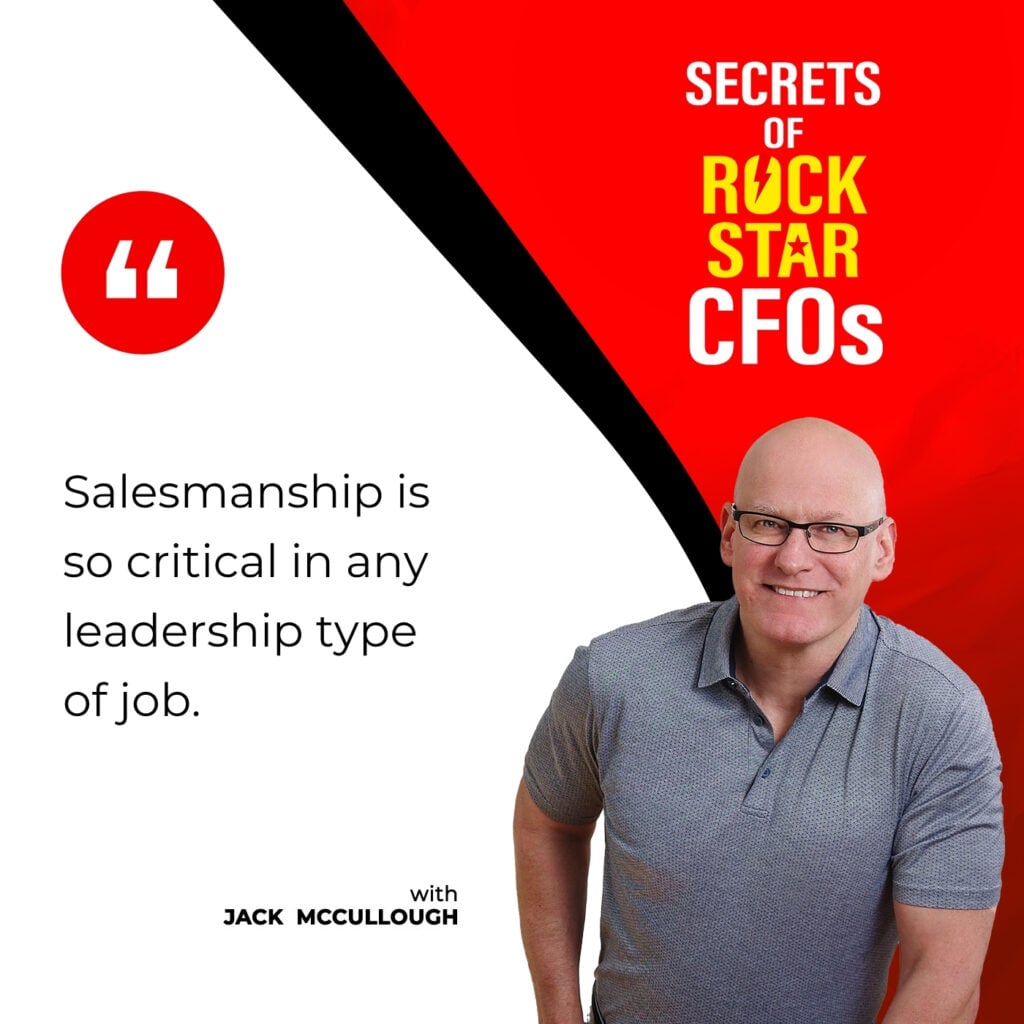
If it were just you on your own, it would be a massive failure. Salesmanship is so critical in any leadership-type job.
It’s the way in which you communicate. As I’ve said, it’s not just “I, I’ve done, or me.” It’s very much, “Did I understand at that point in time the type of experience?” Yes, but I love change. If I were in finance and doing a monthly close, I know I would get tired of that. I wanted the change. I love the restructure. I love the build of things and the impact that they could have. That has been consistent throughout my career.
That’s something I wanted to ask you about, because clearly, you’re an innovator, a risk taker, or however I want to phrase it. Fundamentally, you grew up in finance. You started at Andersen as an old school CPA firm, as there was at the time, and various CFO roles. You’re still a financial steward. How can you advise these young people? More and more CFOs are having the opportunity to be innovators, while not letting go of what some might consider still a core responsibility of CFOs.
Those coming in new, one of the most valuable things that people don’t do, and they don’t ask, is to be in the room. If you are working on your monthly close, you do not get to understand from the C-Suite perspective at that point in time, how it’s delivered, what the reactions are, and what you should anticipate so that you can question it. If you can shadow your boss at those periods of time and understand that boardroom dynamic on what’s important, what works, and what doesn’t work, then it gets you a step further.
You also know what to aspire for. Being able to work with the CFOs, I didn’t know what a DSO calc was when I started day sales outstanding. It was so important for them to get paid. How many days outstanding are we that we haven’t received our revenue? It was key to their metrics. In those conversations, you learn so much more about how executives think, so that you can actually start to get your own education to then fill their needs.
I would say my first advice would be to ask, “Can I shadow? Can I learn?” If they say, “No, it’s private. It’s a C-Suite only,” make sure that in your reviews, or if you have a weekly, ask, “Can I ask how you delivered that and what the response was or what the tough questions are?” It is so that you learn. Most people want to help. It’s just that they’re busy at work, so they don’t always have the time, but put time on the calendar because that will expedite your own interest. Is that the position that you want to be in? It’s what skills you need and what polishing you need to be able to enter there and expose yourself with success.
I commend you for doing that because I talked to a lot of young professionals. They’re afraid to ask people to be a mentor or to ask people for advice. I’ve been doing this a little bit. They might say no, but they’re never angered by the request, or they might say, “No more because I don’t think I’m an appropriate mentor for you,” for whatever reason.
Most of the time, it’s time management that they either won’t have the time, but most people, when you ask them, “Can I understand, or can you help me with this?”, they’re flattered. They want to share their knowledge and their expertise. They’re probably not somebody that you would want on your team and you would want to be working with if they’re not willing to be open to teaching you and to nourish you, so you could grow. That’s a team.
I’m one of those classic imposter syndrome-type people. Even at this point, I still have it a little bit, but when people ask me if I will be a mentor to them, did you run out of every other person you could have? Why me? There are so many better people. When I have taken it on, I’ve done a good job with people.
You have wisdom and knowledge. Don’t have that discount. I always say that for all the years that I’ve worked, there are so many different use cases where you’ve had situations. If you are open to helping people, it’s not about you, but what you can offer them. I come to you for advice, Jack.
A lot of people do. It’s ultimately the person’s decision whether or not they want to accept it, but I’m very free with giving advice at this point. There is one thing I wanted to ask you. You reference it a little bit in your early sports career. It strikes me that in gaming and football, you entered male-dominated industries. I’m curious how you built credibility amongst these circles. Maybe you had a head start from your early teen years experience playing lacrosse.
I didn’t intentionally go for male-dominated environments. It just so happened that it did play out that way. There are two things. I can tell you a bit more about my leadership model and style with Connect, Trust, Grow. It’s what I call the CTG. It has helped me achieve, personally and professionally, to transform myself in my life, being very authentic, like what we’re talking about, building trust on a team, and then quick wins to grow.
If you think about it, if you don’t connect with people, you’re not going to build trust. If you can’t build trust, then where’s your vision? Where’s the growth? It’s a very simple model, but what I do is I distill and break it down to the values that I created, how I used it at Viacom, that blueprint of my own transformation. When I got to the league, I used it there for a quick win, but to do the transformation of the work. That being said, there’s one key value that I always have and I firmly believe in. If you don’t ask, you don’t get.
How did a CFO go on to become a Head Senior Vice President at the NFL to run an innovation platform? I asked for it. I used my CTG model, meaning I had gone back to business school after I had first started at the NFL. I was doing the apparel strategy. After doing the new portal for bidding, we grew the business 220 percent. We had a billion-dollar deal, my first billion-dollar apparel portfolio deal I’d ever done. We brought Nike and New Era on the field. I was like, “What an opportunity.” One, from the exposure from the NFL, the power of that brand, and how it resonates, but also, the amazing opportunities that the NFL could provide me if I had flipped my experience there and put my purpose into it. What was I passionate about at that time?
I did a lot of work. First, I went back to business school because I had gotten into schools here in New York, and the NFL had asked me to defer it for the apparel strategy. I went to NYU. I was immersed in leadership studies, new perspectives, but I listened to my career. There was one teacher, Anat Lechner. She would have these case studies on how to think outside the box and how to build teams, to make that transformation happen, but it was like sci-fi stuff to me. Where did that vision come from? How do you tap into that vision to create a strategic plan, which is what I always loved to do?
After business school, it so happened that the NFL had a new talent mobility program. It could not have been a better time. It was for VPs, vice presidents. They wanted to stimulate the culture to think differently about what you could do and fine-tune different skill sets. With a little bit of business school spirit and type A, I spent a lot of time on what I called the Langton Roadmap. I built this Langton Roadmap, which was an integrated plan. It was one page. I put all my accomplishments, what I had done, and how it impacted the business.
People don’t do an internal resume. You think, “I’m going to do that externally,” but what I was doing was my internal resume, because people in positions change, especially in HR at that time. Here, we have a new program. I’m going to show you. I had all my accomplishments. The middle column was manager feedback, my leadership skills, what they said about me in constructive criticisms and then it was my blue sky. In my blue sky, it was very clear that I wanted transformational growth and leadership opportunity at a time when there was a league of denial with all the concussion crisis. I wanted to help because it was so personal to me.
I wanted to help build out the league-wide youth strategy because of what sports did to me in my youth. They were having issues with kids coming into sports in the pipeline at that point in time. It was also to help build out the health and safety portfolio or the safety strategy for athletes. Why? It is because in my second year of college, I not only blew out my knee playing at the Yale Bowl, that was a career in my identity that I lost. It was a career-ending injury.
I also lost my mom to cancer. With that double blow, here was an opportunity to say, “I can turn this into purpose.” If I could help to mitigate injuries that happened to me and that experience that I had to happen to most elite, then it was my passion. I connected my purpose and my passion to what the league needed at that point in time. It was somebody to come in with a strategy and somebody to come in and help build out that vision. It was a team. It was not just me. They responded to my request.
In 2014, at a time when the NFL was being very scrutinized as the League of Denial and the Concussion movie with Will Smith was coming out, there were Frontline episodes and Congress was holding hearings, I stepped into this new role. I don’t think I knew what I was asking for, but I was passionate about it. If you don’t ask, you don’t get. My passion is what helped me to not only be so stimulated there, but be more transformative, because I played into what my skills were, not what I didn’t have, which is the science. I’m not a doctor. There are many things I’m not, but I know what I’m good at. I played into that. When I started in the league, it was all of that scrutiny. Upon leaving, the league was down to the lowest number of concussions in history.
That’s amazing.
It went from the league of denial to what I call the league of solutions. Why? It is because of what we built, data and insights like those of other companies. The more data you have about the injury, the more we can give the data to the athlete management teams that work with the players to mitigate those injuries. There are numerous different examples that I can go to, but better insights, and insights they have not had before. What we could consolidate across 32 teams, 53-man rosters, is different than what a team could do. With that power of the N and the insights that we were able to provide, they were more educated. We made their job more efficient by providing them with data so that they can manage their players in real time, which they hadn’t had before.
That’s remarkable. Like most Americans, I’m a big football fan. Few things are more enjoyable than watching people play football at a very high level. When you hear these stories about concussions several years ago, whenever it was, and you’d see these players getting injured, I actually remember thinking, is the future society going to look back upon us the way we look back at Romans feeding the Christians to the lions? Is this going to be considered barbaric? Thank God for you and your team for the remarkable achievement that you did. Thinking about where we were, you did it in less than a decade. That was unthinkable several years ago.
That truly is the power of the NFL when I say it was a meaningful experience. I grew as a human, but I also grew as a female. I played into my strengths, which is building those authentic connections with numerous different disciplines that never worked before. The expert ecosystems were compounded of who we were bringing in and excellence. It was my ability to authentically connect. I’m going to go back to a point that you made about the transformation. It was to build that team. It was the quick wins and the continuous growth.
Here’s why they trusted me. It is because of my passion associated with it. I once spoke to a school that was considering canceling its football program. I had explained to them all that we had done at the NFL. With every intent that it will trickle down, not only football at the college and youth level, but through all sports. I do firmly believe that. I said to this board, “I’m sitting here in front of you today. I would not be in my seat. I would not have been afforded the opportunities that I’ve had if I didn’t play sport. I blew out my knee. I had a career-ending injury. Would I do it all again? Absolutely.
What I would encourage you to think about is the values and what it’s going to offer, not be in fear of an injury. That’s not a way to look or see, especially in the digital age when people are so digitally connected. You need the human connection. You need those authentic connections. You need to learn how to build trust and accelerate a team and growth.” That’s why every single one of our teams that were so diverse with different experiences believed in me.
That’s leadership in a nutshell, pretty much. It’s a rare opportunity for me to interview you, because top of mind for CFOs is AI and analytics. Few people know how transformative these can be as you do, given what you’ve done. What advice can you give CFOs to embrace these technologies? They’re not innovative. They also have concerns that other executives don’t have around data privacy and cybersecurity generally, that maybe some other members of the C-suite aren’t thinking about.
This goes back to many of the talks that I give. As I said, it’s very authentic to me. Being the only girl on a boys’ team, here I am in a space where we’re starting this new department in health and safety. We had numerous different quick wins with different partnerships, etc., but we were manually counting. I’m going to go to my advice in a second. We were manually counting the number of head impacts in a game.
NFL technicians took four days to count the number of head impacts. We do a double blind review to make sure that it was consistent, statistically significant. That’s eight days. I was like, “There’s a better way to do this. All of the implementations that I’ve done in the data insight, there is a better way to do this.” Do you think I would have done that on my own? No. Data privacy is this. You have to build and connect first with the expert ecosystem. You will never have all the answers, and it is overwhelming, whether that is a lot of times you’d have consulting firms, but bring together the areas of expertise and excellence.
What I did at that point in time was we came up with a vision. How do we quantify our game, meaning the number of impacts on the field, so that we don’t have to go through that very laborious approach of counting? We knew the data was so rich and was impacting. We were giving that to helmet manufacturers. It was created for rule changes. The insights were so profound. However, you can’t scale that way.
We went on a roadshow where I had one of our chief engineers and numerous others, where we pitched what our vision was to all big tech partners, to MIT, and to Columbia, who were on the forefront of new technologies in the space, and knew from a commercial corporate perspective who was doing what. That is education. We were learning. Get out, understand what the market is, and understand what the opportunities are. I will say that, yes, many people wanted to work with the NFL. If you don’t get out, learn, and build that expert ecosystem that you need, no one CFO, I couldn’t have done that on my own.
Build the right expert ecosystem that surrounds you so that you can either go and present and pitch that to a CEO or your COO. Get the area of expertise and the knowledge that you don’t have to play that forward. You could have it internally. You have to make sure that when you’re presenting these big visions, there have to be quick wins. If I were to go in and say, “We want to predict injuries for NFL athletes,” what? We had to start.
The start was, “It takes us four days to count.” Is there, and there is, a computer vision technique because we have all the impacts in video? Is there a way that we can, by code, count and track a player and those impacts? There was. Here was a vision where there was a technology that could be deployed then. We ended up crowdsourcing those two algorithms. Ready for this. In seconds, near real-time, the NFL has had impacts back to 2015 because of two algorithms that were built.
Sitting in your seat or me as a CFO, would I have had the vision to do all of that? No, it was getting out of your seat and getting the area of expertise. I always say, and this is what I do a lot in my consulting, is to coach. Who do you need to help refine that idea or build that strategy? What expert ecosystem do you need? It’s overwhelming. Once you have the confidence and once you do that due diligence, it’s much easier to go in and to present for funding, for a new strategy, or for a strategic partnership to get that done.
It led to what you’re doing now, where you’re advising a lot of organizations on growth and transformation. I’d love to learn a little bit about that. In particular, one of the things I noticed that you’re doing is you’re utilizing AI strategies to support human work, not to replace human work. That’s critical. Can you share a little bit about that?
This is my experience. I know that, through the years, AI has been transformative broadly and publicly. The AI application that we were building was a closed environment. It was longitudinal records and quantifying body movement, where we can predict injury. That is very different from what the world in the digital space and AI is offering. I wish that I had had that when I was working. An important principle is that when you are building AI or you’re building technologies to deploy, it has to be human-centered.
Go to the experience that I had offered at Viacom. If I didn’t sit with those executives, compare and contrast, and understand their concerns and their needs, they wouldn’t have used the application. It sunk. If you don’t understand the human need for it, and you’re not able to convey with confidence that they’ll have more utility, then what are we doing? It has to be human-centered. Another example of that is we created this engineering roadmap.
It was an investment in how to better understand counting the head impacts, but reviewing every concussion and video. We annotated so many variables. It was such rich data. We could give that data to helmet manufacturers so that they could better design helmets for each position to withstand that type of severity in those types of locations and impacts. It is very different for different positions. One of the hardest things is to have an elite NFL player who has grown, who is the top performer on his team, and you’re going to tell him to change his helmet?
Probably not.
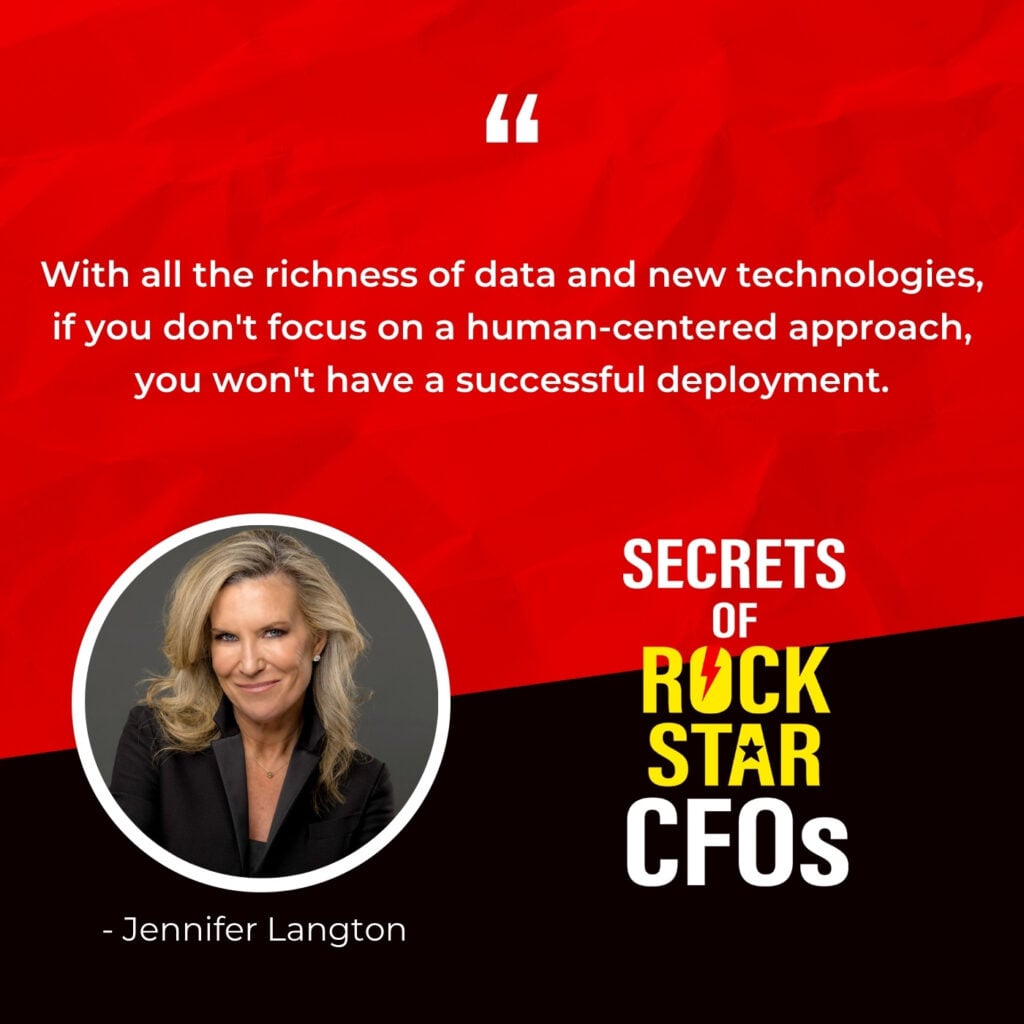
In my experience, working with the equipment managers at each one of the clubs, if I didn’t educate and inform them, because they were the conduit to educate the player and outfit the player, then we would not have been successful. With all of the data, the richness of the data, and new technologies, whether AI or helmet technologies, if you don’t focus on the human-centered approach, then you’re not going to have a successful deployment. It could fall flat, and that’s the risk.
The third example is when we built this AI platform for the athletic management team. You’re talking about the sports scientists, the athletic trainers, the team positions, etc. You’re giving them information, insights they hadn’t had before. Because we integrated and aggregated data across all 32 teams, all rosters, you can compare one running back, loads, and exertions across all running backs, de-identified. They hadn’t had that before. It gave them more insights to do their job more effectively and made them smarter.
We weren’t replacing them. When I say human-centered focus, AI is coming. It’s here. If you don’t adapt and embody it so that it can evolve your role and make you more efficient and smarter, then you’re going to be left behind. That’s very similar to when we had the dot-com boom, and you had all those local mom-and-pops that didn’t want to go online. I’m sure your sales are hurting. Climb on board. This is my experience. In my experience, when we have built technologies, AI platforms, if you don’t work with the end user and make it human-centered, then you risk the lack of adoption, the lack of use, and the lack of rollout. It has been my experience. In this day and age, it is so important for individuals and corporations to get on board.
As soon as you were talking about the human thing, I’m old enough to remember when most hockey players didn’t wear a helmet. When the league mandated that they had to wear a helmet, they fought it. You wouldn’t remember it. You’re a few years too young. They actually grandfathered you in if you’re already playing and not using a helmet. You didn’t have to. It was the rookies, and anyone after that had to. I remember Phil Esposito still playing into the mid-1970s with no helmet. He was the last one, as far as I know.
I won’t name names, but we had gotten to a place where we were able to work with the NFL PA. The NFL is working with the Players Association, where we tested every helmet in a laboratory to understand the helmet’s performance. I’m overly simplifying. There were some helmets that were correlated to a higher risk of injury. It was proven. We had the data and the science to support it, yet the player wouldn’t change out of that helmet.
It’s exactly what you’re saying. You have the conviction with data, which is very important. That’s that trust element, but behaviors are hard to change. We had to grandfather certain players in so that they would adapt and acclimate to a new helmet over the course of that year, because they were well-known players. They’re all well-known, but you have to have an acclimation period. We at the NFL went through that as well. It was brilliantly handled.
This has been a lot of fun, Jennifer. I know you have a lot going on. Thanks for taking the time to do it. I’d like to close. One thing I noticed from your website, your mission is to inspire the next generation of innovation leaders. It’s a coincidence that we used almost the same phrase, because our mission is to inspire the next generation of financial leaders. I’d like to ask you, maybe some closing words for the next generation of innovative financial leaders. What should they be thinking about?
I love it. I very much enjoyed the conversation and appreciate you, Jack. It’s been fun. I’ve shared a lot. One of my caveats is that if you don’t ask, you don’t get. For many of those looking to climb into the C-suite CFO position who are climbing the finance ladder, ask to be in those boardrooms. Ask for the report out, pre and post, to learn. When I did my career pivot, I asked for it, but I didn’t make it all about me. I tied it to my own personal passion and purpose, but aligned it with the league’s organization.
Think about strategic ways to transform oneself and for an organization, which are extremely important. I had given a talk that was for a healthcare organization. I do have a website, Jennifer Langton Inc. My speaking engagements and my consulting are so important. I’m going to give you a concrete example of why. I had gotten up, and I was explaining to the women the Langton Roadmap and how it was transformative because many people asked how I went from being a CFO to running an innovation platform.
There were a few other tidbits that I shared in the AI space, going on the technology roadshow. There was a line of women because it was women pioneering in healthcare. There were two follow-up consulting jobs that I had done, which resonated so much with me that this is how I want to impact the future generations. There was one woman who started in mental health, a business, and a platform. She wanted to better understand how she did her own roadmap to tie her own passion into it. She had lost somebody to mental health, but that’s nowhere in her pitch deck. I coached her on how to build out her own storyline. That was purpose and passion. It was so rewarding to me.
Another one was, how do we build out or think about an infrastructure for AI? People are overwhelmed. That roadshow is going out. It’s like, “Yes, I can bring you through the rigor that we went through on the things to think about. It’s not just a cloud and cloud computing environment. You need people to build with subject matter expertise.” That’s the type of impact from years of working. I still consider myself young, but from years of working, that’s the type of impact that resonates and I do care about. That’s influencing the younger generations. Sometimes, it’s the older and wiser, but they need new, innovative learning in this day and age.
I’m always reluctant to ask advice for the next generation because occasionally, I do have guests who are 38. I have a niece. She was teaching robotics. She was seventeen. She was teaching robotics to thirteen and fourteen-year-old girls. She won a robotics contest. She loves teaching the younger generation. “You’re seventeen. I worked at Burger King. What do you mean?” This has been a lot of fun. Thank you again for your time. I’d like to give you the final word to wrap this up.
Thank you very much. As I said, one of the greatest life lessons and opportunities that I’ve had was the value of sports and finance. They were my backbone to transform my career. That’s what I want to do and play forward. If there are any of your guests who are open to a speaker that had to create that transformational impact and consulting, please reach out directly to me. Everything is listed on my website, Jennifer Langton Inc. I want to impact the next future generations like you did, Jack.
